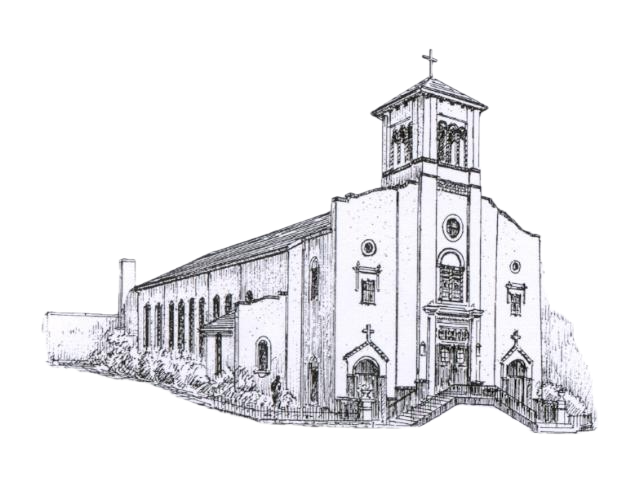
History Introduction
Founded on December 13, 1919, Mary Queen of Peace Catholic Church was established as a parish of the Roman Catholic Church to serve the spiritual needs of the faithful of Pottsville, Pennsylvania, under the patronage of the Blessed Virgin Mary, Queen of Peace. In its earliest years, the parish worshipped first in temporary quarters and then in a converted stable chapel on North Centre Street, while continuing regular ministry to the Catholic community at Mt. Laffee. Construction of the present Spanish Mission–style church, designed by architect G. C. Freeman of Reading, Pennsylvania, began in 1928 and culminated in its solemn dedication on August 25, 1929.
For generations, Mary Queen of Peace was a center of Catholic worship, the celebration of the sacraments, religious education, and parish life, including a parish school that operated from 1925 to 1966. Although the parish was consolidated in 2008 and the church was formally closed in 2021, the sacred character of the church endured.
Through the dedication of faithful stewards, the generosity of donors, and with the support of the Diocese of Allentown, the church entered a new chapter when it reopened as a Catholic chapel on September 22, 2025, under the care of the Society of Mary Queen of Peace of Pottsville.
Today, Mary Queen of Peace continues its sacred mission as a place where the faithful gather for the Holy Sacrifice of the Mass, prayer, devotion, and the celebration of the Church’s sacred traditions, preserving more than a century of Catholic faith and bearing witness to the enduring presence of Christ in the heart of the community.
Mary Queen of Peace Through the Years
Tracing the legacy of Mary Queen of Peace—from its beginnings as an independent Catholic parish in 1919, through its suppression in 2008, to its present-day role and preservation as a beloved historical Roman Catholic Chapel in the Diocese of Allentown approaching its centennial anniversary.
The 1910s
During the 1910s, northern Pottsville’s growing Catholic population was served by the established parishes of the city, while communities such as Fishbach, Jalappa, Norwegian, and Mt. Laffee increasingly demonstrated the need for a parish closer to home. By the end of the decade, the Archdiocese of Philadelphia responded to that growth by establishing the parish that would become Mary Queen of Peace, laying the foundation for its development during the 1920s.
1919 - Founding of the Parish
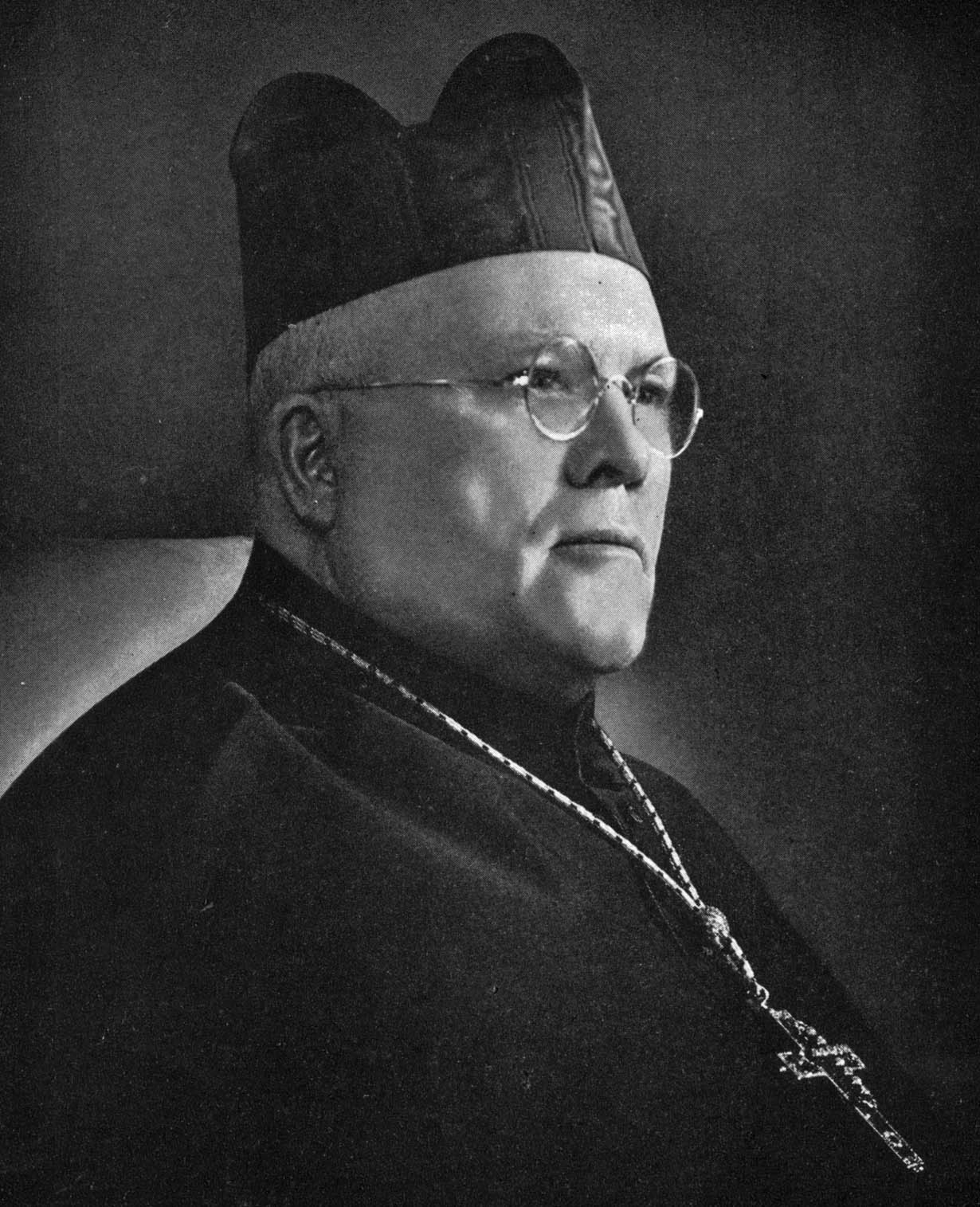
In 1919, Cardinal Dennis Dougherty established a new Catholic parish to serve the growing communities of northern Pottsville, including Fishbach, Jalappa, and Mt. Laffee. At the time, Pottsville and Schuylkill County were part of the Archdiocese of Philadelphia, decades before the Diocese of Allentown was established in 1961. On December 13, 1919, the boundaries of the new parish were formally defined. The following year, Father George W. Shay would take charge and establish Mary Queen of Peace on North Centre Street, beginning a new chapter in Pottsville’s Catholic history.
The 1920s
The 1920s transformed Mary Queen of Peace from a newly established parish into a thriving Catholic community. Beginning with the acquisition of the Seltzer property and conversion of a former stable into the first chapel, the decade brought a rectory, parochial school, convent, the Little Flower Chapel at Mt. Laffee, and a growing network of parish organizations and devotions. By decade’s end, that remarkable period of growth culminated in the construction and 1929 dedication of the present Mary Queen of Peace Church.
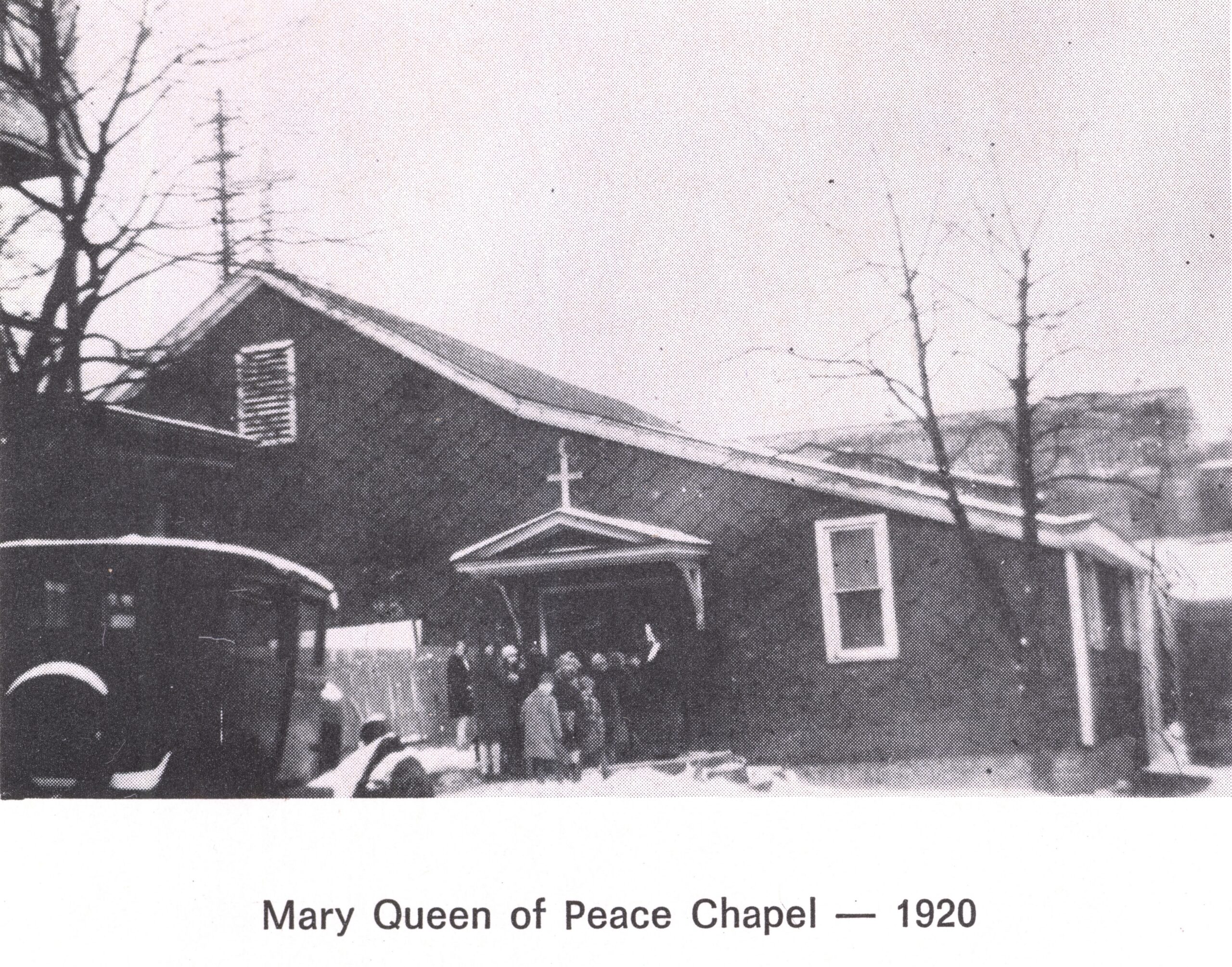
1920 - The Original Mary Queen of Peace Chapel
The first Mary Queen of Peace Chapel on North Centre Street, established in 1920 on the former Seltzer property. Originally a stable, the building was converted for Catholic worship as the newly established parish created its first permanent home. It served the congregation until construction of the present Mary Queen of Peace Church began in 1928, preserving an important link to the parish’s humble beginnings.
1928 - A New Church Rises in Pottsville
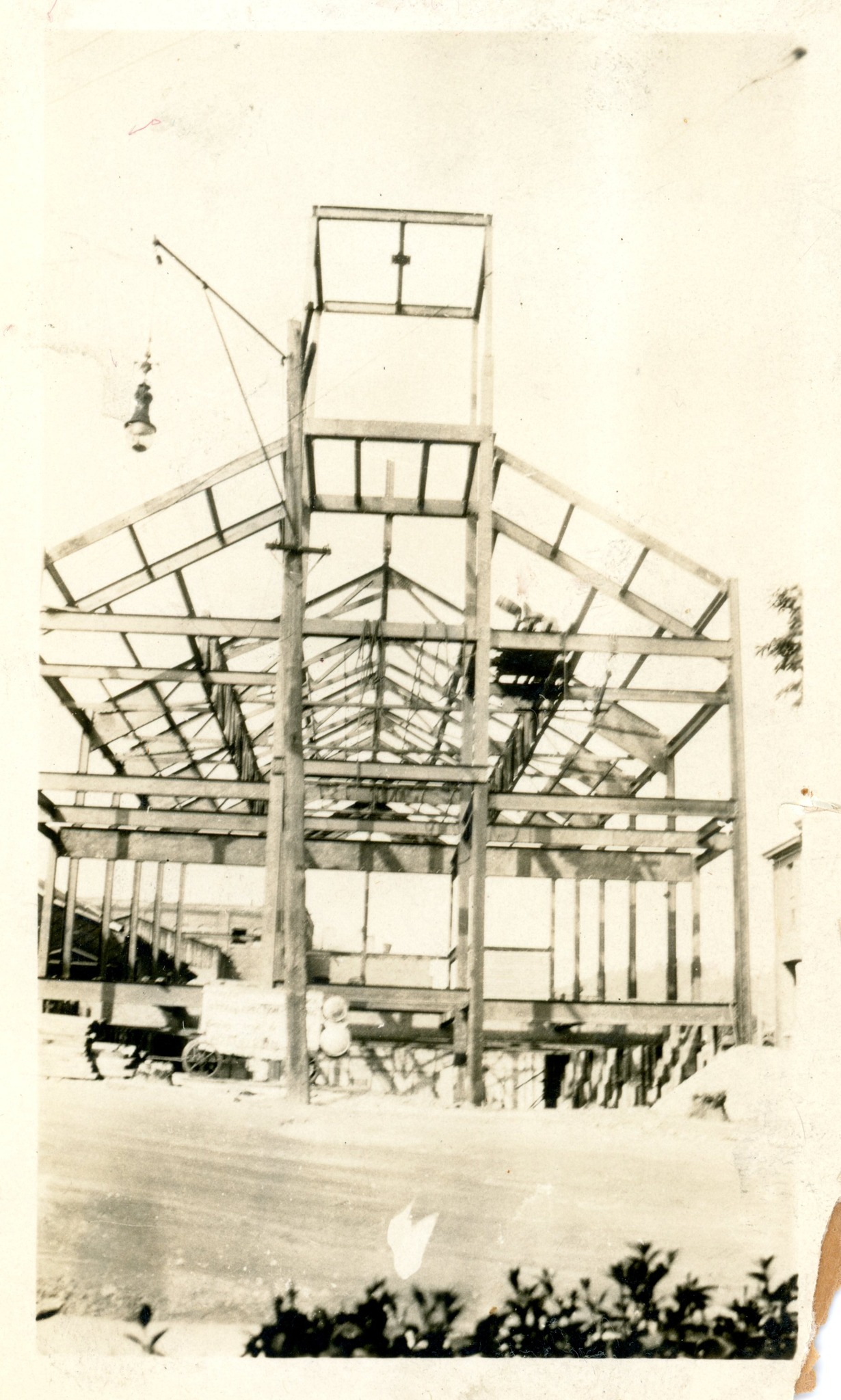
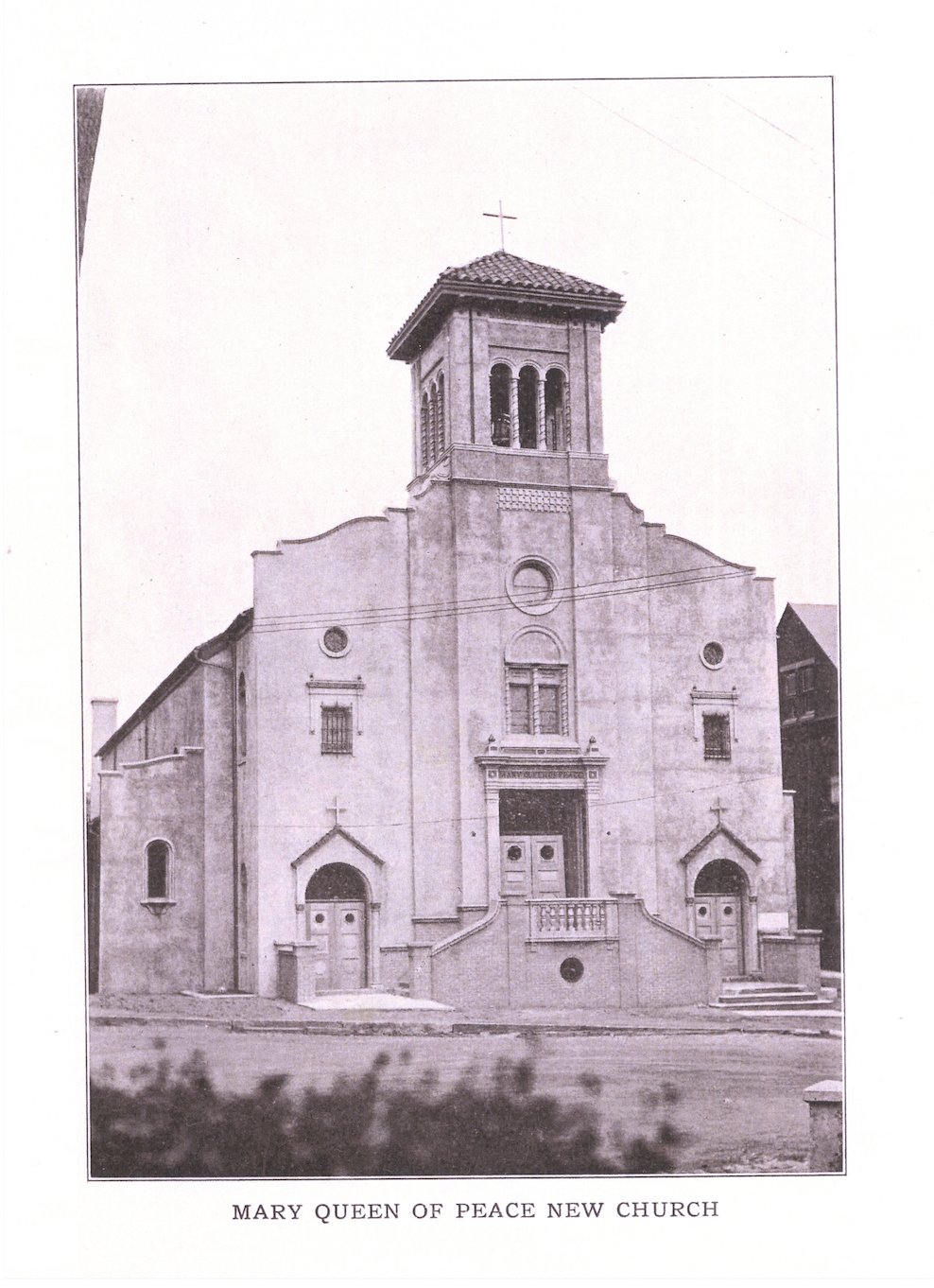
By 1928, Mary Queen of Peace had outgrown the converted stable chapel that had served the parish since 1920. Construction began on a permanent Spanish Mission-style church between the rectory and convent, designed by G. C. Freeman of Reading to accommodate the growing parish and its expanding religious and community life. By the end of the year, the principal structure stood largely complete—a remarkable transformation from the modest chapel in which the parish had begun only eight years earlier.
1929 - Dedication of the New Church
The work of the previous decade culminated on August 25, 1929, when Most Rev. Gerald P. O’Hara, Auxiliary Bishop of Philadelphia, solemnly dedicated the new Mary Queen of Peace Church. Earlier that year, the parish’s new memorial bell was blessed and raised into the tower, and on April 11, Cardinal Dennis Dougherty laid the cornerstone before parishioners, schoolchildren, clergy, and visitors. The dedication gave Mary Queen of Peace a permanent home and marked the beginning of a new era for the parish after nearly a decade of extraordinary growth.
1985
Rededication of the Church
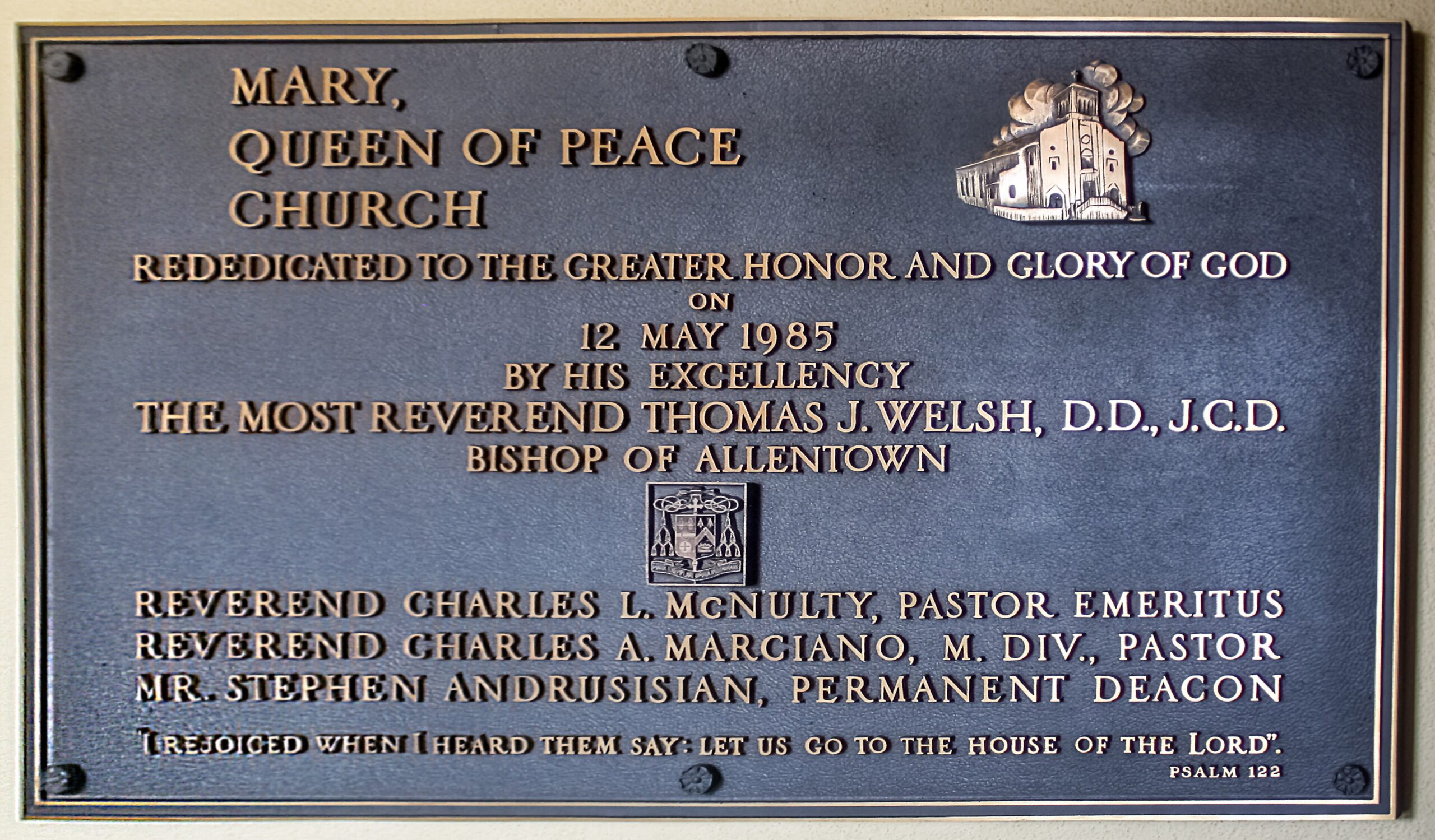
Mary Queen of Peace Church was rededicated on May 12, 1985, to the greater honor and glory of God by Bishop Thomas J. Welsh of Allentown. The rededication also commemorated the service of the Reverend Charles L. McNulty, Pastor Emeritus; the Reverend Charles A. Marciano, Pastor; and Mr. Stephen Andrusisian, Permanent Deacon. This 1985 rededication marked an important moment in the the parish, expressing renewed devotion and the joy of restoring the church’s sacred purpose. Among the many upgrades was the locally known Schulmerich Carillons Basilican II-D, an electronic carillon system that uses programmed bell sounds, automatic scheduling, and tower speaker output to provide chimes, tolling, Angelus ringing, and hymn playback.
1999
First World Wide Web Presence
Around the late 90's, Mary Queen of Peace launched its first parish website at maryqpeace.com, creating an early digital presence on the "information superhighway" that extended the parish into the emerging online world. The site shared Mass times, devotions, parish activities, staff information, prayer requests, and Catholic resources, serving as both a practical tool and a reflection of a vibrant parish community. In hindsight, it remains a valuable historical record—capturing how Mary Queen of Peace presented itself and served its people at the dawn of the internet age. Today, the link remains active and now forwards to our current maryqpeace.org domain.

The 2000s
The early 2000s found Mary Queen of Peace continuing as an active Catholic parish, with regular weekend and weekday Masses, religious education, devotions, choirs, parish organizations, and community activities filling the church and social hall. By 2004, the parish was led by Father John Bambrick with Permanent Deacon Steve Andrusisian and an active lay staff. The decade would ultimately bring profound change, culminating in the parish’s suppression and final Farewell Mass in 2008.
2008 - Parish Consolidation
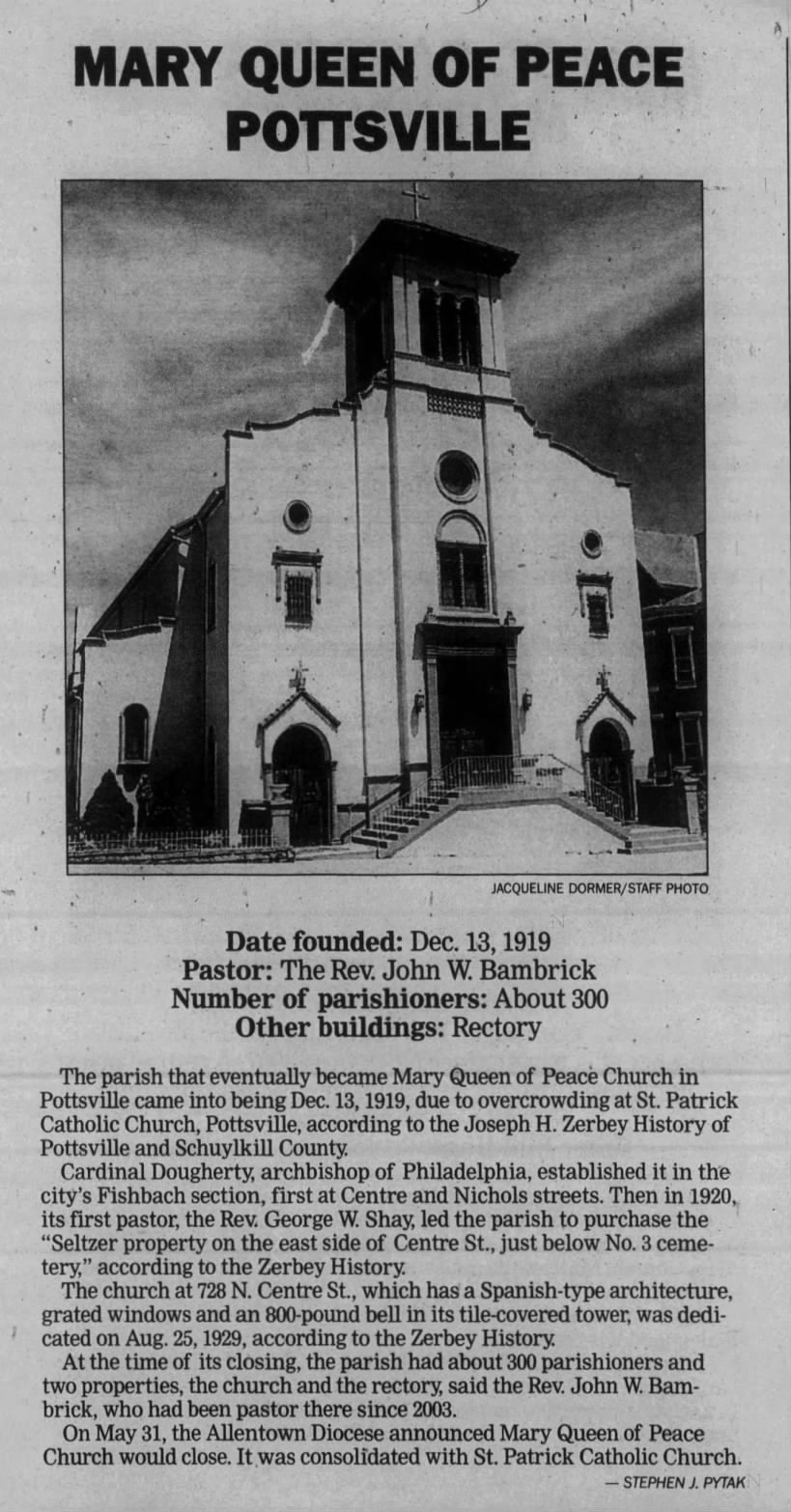
In 2008, Mary Queen of Peace Parish was closed and consolidated into Saint Patrick Parish in Pottsville as part of the Diocese of Allentown’s broader parish restructuring. In the Pottsville area, Mary Queen of Peace, St. Joseph, and St. Francis de Sales were consolidated with St. Patrick, while the wider diocesan plan announced the closing of 32 churches. At the time of the parish’s closure, Rev. John W. Bambrick was final pastor of Mary Queen of Peace as a parish. Although the parish itself was suppressed in 2008, the church building remained under Saint Patrick Parish and continued to hold limited liturgical use for some years afterward. The final farewell Mass as an independent parish was celebrated on July 13, 2008.
The 2010s
The 2010s were a period of transition for Mary Queen of Peace following the end of its life as an independent parish in 2008. The church remained part of the Catholic community of Pottsville under St. Patrick Parish, with occasional liturgical use preserving its connection to the faith and traditions of generations who had worshipped there. Though no longer home to a separate parish community, Mary Queen of Peace remained a familiar and significant Catholic presence on North Centre Street.
2012 - Enduring Sacred Use
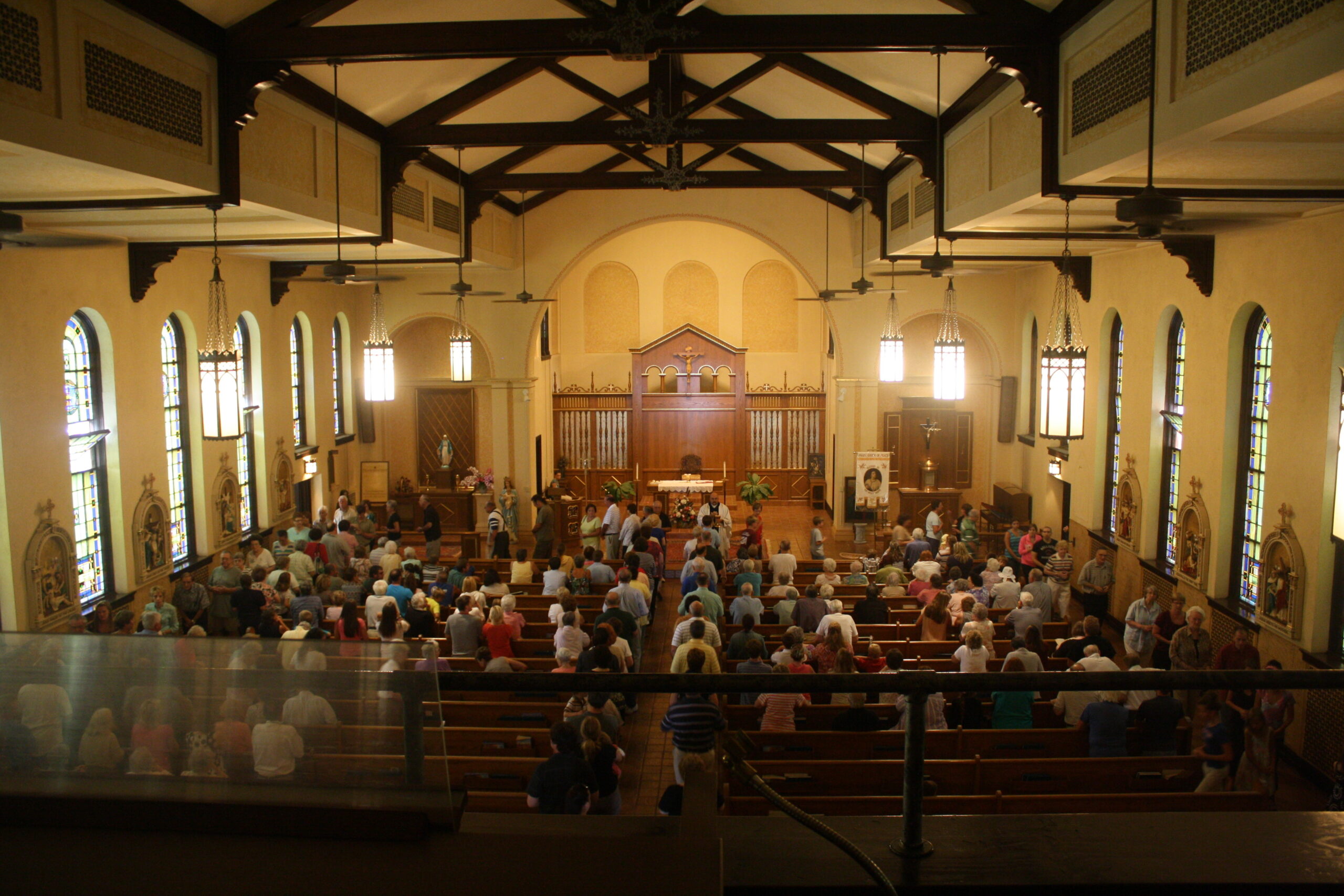
Following the diocesan decision in 2008 to close several churches, the faithful of Mary, Queen of Peace, led by Mr. Robert Antonini, joined parishioners from neighboring communities in petitioning the Holy See, appealing to the Congregation for the Clergy for reconsideration. While the Vatican ultimately affirmed the parish’s merger with Saint Patrick’s, it also recognized the enduring sacred character of the church building. The Congregation directed that the church remain open for sacred use, entrusted to the pastoral discretion of Saint Patrick’s pastor, Monsignor Edward J. O’Connor. In accordance with this directive, the church continued to be used for sacred celebrations on designated feast days and for funeral liturgies, allowing former parishioners and their families to return to the church for moments of prayer and remembrance. This provision honored both the devotion of the faithful and the church’s lasting identity as a consecrated place set apart for worship.
The 2020s
The 2020s brought both uncertainty and renewal to Mary Queen of Peace. Following the church’s formal closure in 2021, a community-led preservation effort ultimately secured its future, leading to the establishment of the Society of Mary Queen of Peace, acquisition of the property in 2025, and its reopening as a Catholic sacred space. Today, preservation, prayer, community activity, and the return of occasional Masses are carrying Mary Queen of Peace toward the centennial of the present church in 2029.
2021 - Church Closure
Although Mary Queen of Peace Parish had been consolidated with Saint Patrick Parish in 2008, the church building itself remained standing and in limited use for years afterward. On May 14, 2021, the former Mary, Queen of Peace church building in Pottsville was formally closed because it was little used and increasingly costly to maintain, and the Diocese of Allentown announced that the property would be offered for sale. Many sacred images, furnishings, vessels, and altars would be preserved for continued use at Saint Patrick Parish. Though a sorrowful setback at the time, the closure unexpectedly created the path for the church’s eventual preservation and restoration in the years that followed.
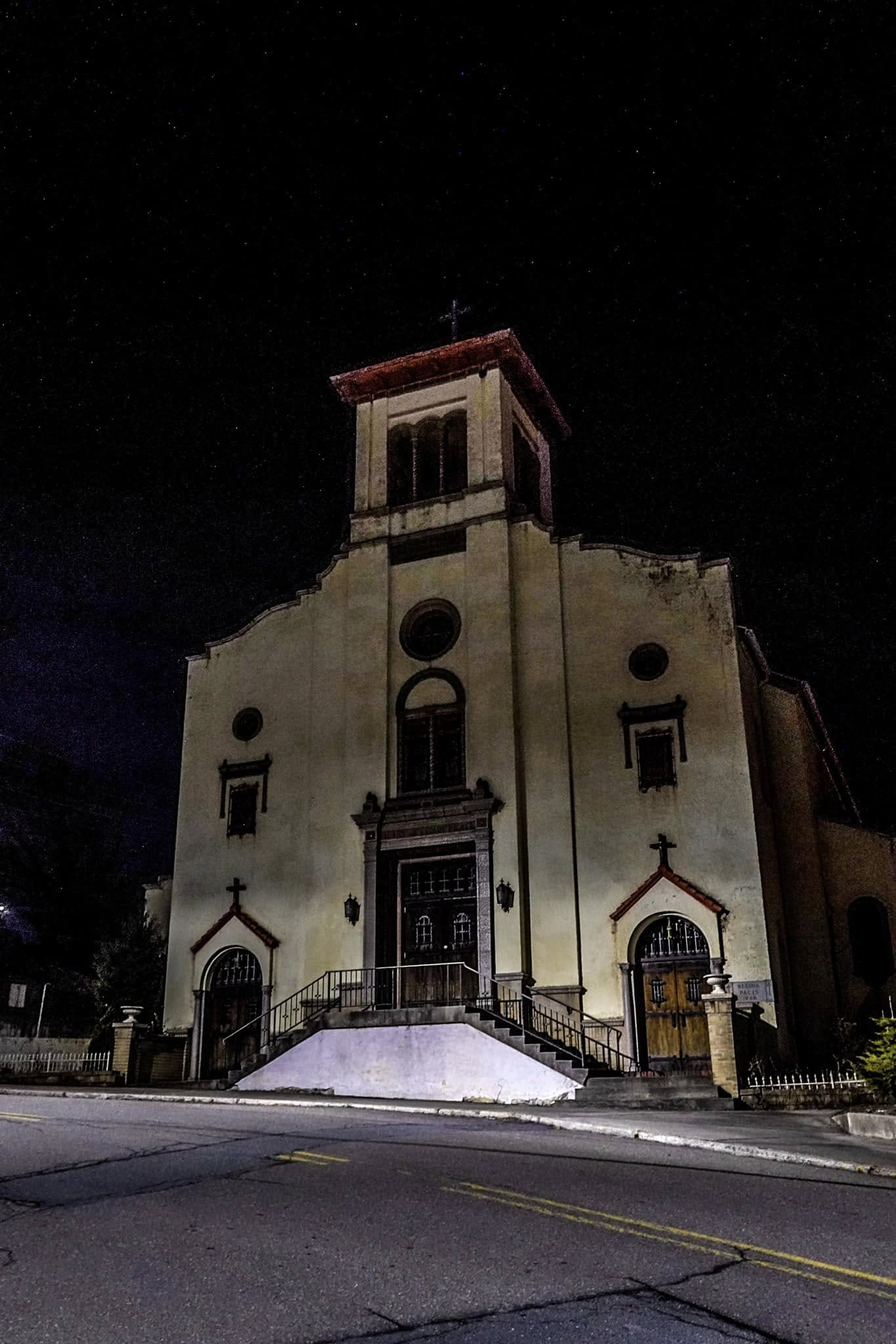
2022 - A Path Forward for Preservation
In the years following the church’s closure, a path forward for preservation began to emerge as supporters and former parishioners organized, raised funds, and explored possible options acceptable to the Diocese of Allentown. Their efforts were strengthened by the guidance of Save Rome of the West, which provides support for canonical appeals, preservation groups, and the protection of Catholic sacred space, and by the experience of Brody Hale in church-preservation and canon-law advocacy. Working together, this consortium sought a course that would preserve Mary Queen of Peace as a sacred Catholic place in a manner faithful to Church doctrine and in keeping with canon law. These efforts laid the foundation for the church’s eventual preservation and future reopening as a chapel, unlike other dioceses where secular use or demolition occurred.
2024 - Fundraising and Preservation Efforts
In 2024, supporters of Mary Queen of Peace took a decisive step toward the chapel’s future by forming the Society of Mary Queen of Peace of Pottsville, Inc., a Pennsylvania nonprofit corporation. Incorporated on October 25, 2024, the Society was established to preserve Mary Queen of Peace Church as a Catholic sacred space, keep the property in good repair, and ensure its continued use for private prayer and Catholic devotional activities. The creation of the Society gave formal structure to the community’s fundraising, preservation, and advocacy efforts, helping channel donations and volunteer support into the long-term stabilization and care of the chapel.
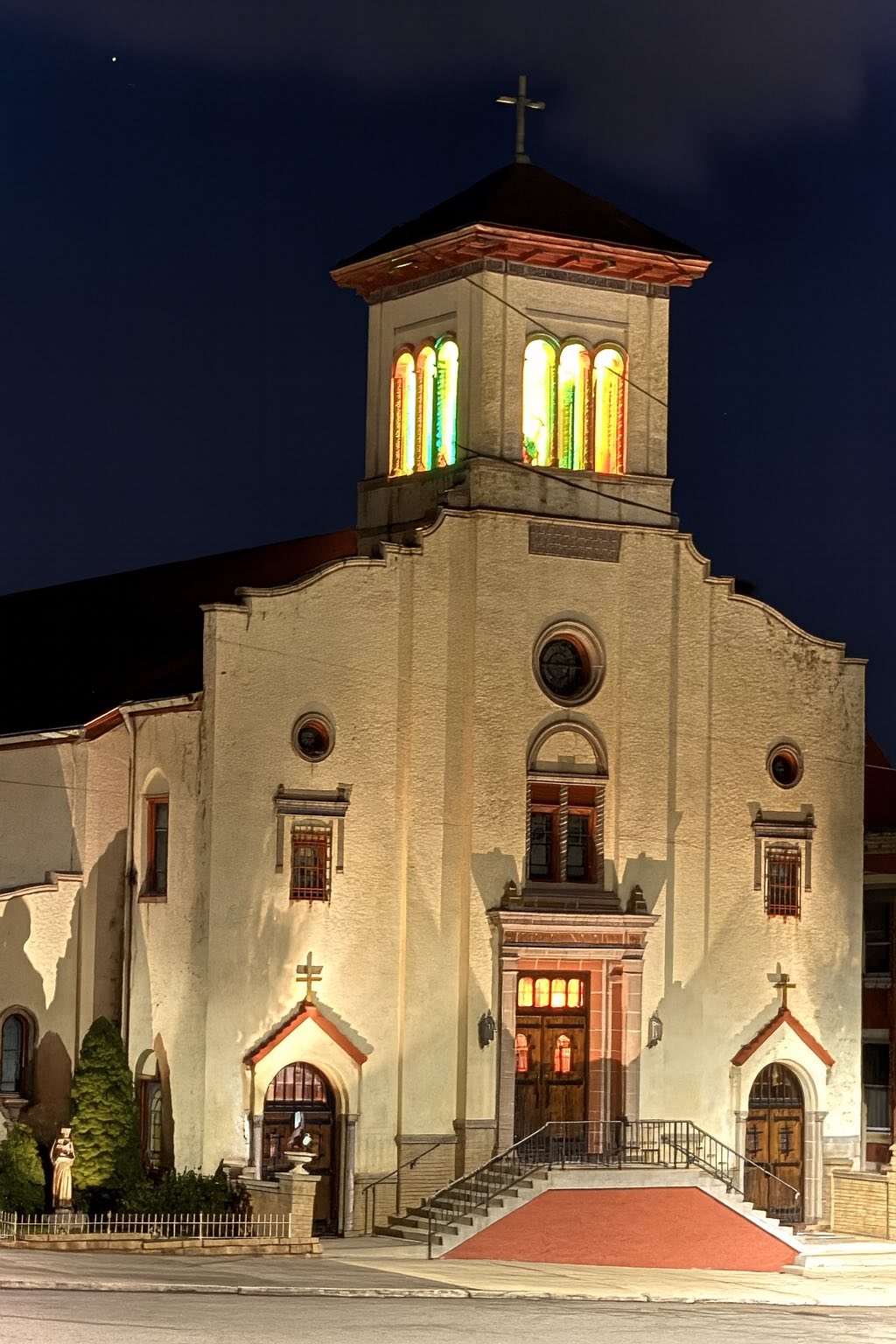
2025 - Reopening as a Catholic Chapel
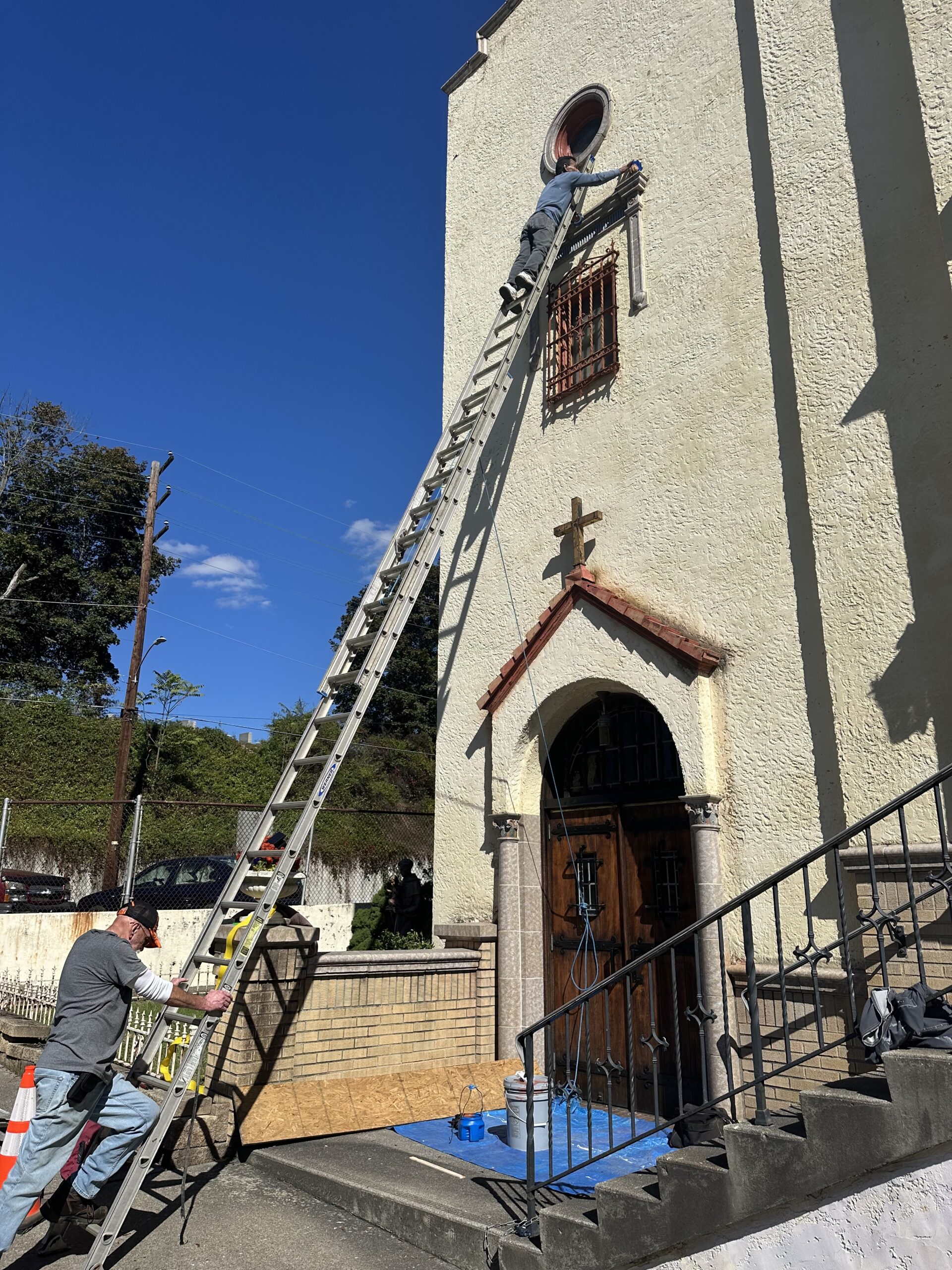
In 2025, Mary Queen of Peace entered a new chapter as the effort to preserve the church moved from organization into active stewardship. After the Society of Mary Queen of Peace of Pottsville, Inc. had been formed in late 2024 to preserve the church as a Catholic sacred space for private prayer and devotional use, the Society continued its work in 2025 by securing the property, maintaining legal and corporate filings, and beginning the practical labor of restoring and sustaining the chapel for the future. By late 2025, the deed and title insurance were in hand, while ongoing fundraising, utilities, maintenance, and planning efforts were directed toward stabilizing the church and supporting its renewed devotional life in Pottsville.
2026 and the Future
In 2026, the work of preserving Mary Queen of Peace entered a new phase of steady rebuilding, planning, and public renewal. Committee discussions reflected not only the practical demands of caring for the property—addressing utilities, exterior repairs, heating needs, tax matters, and furnishings—but also a growing effort to strengthen the chapel’s long-term future through fundraising, website development, donor outreach, and plans for a formal endowment. At the same time, devotional life began to re-emerge in visible ways, including Stations of the Cross, a baptism, planning for future Masses, and renewed public interest in the chapel as a place of prayer. Looking ahead, the Society’s vision extends beyond immediate repairs to the lasting preservation of Mary Queen of Peace through organized committees, expanded stewardship, historic preservation efforts, and preparation for the church’s centennial in 2029.
Clergy & Religious
Pastors, assistant priests, bishops, deacons, chaplains, and religious sisters who shaped the Mary Queen of Peace parish, school, and chapel from 1919 to the present.
Mary Queen of Peace has been shaped by generations of priests, bishops, deacons, and religious sisters. From Father George W. Shay, who organized the parish and led the construction of the present church, to the Sisters, Servants of the Immaculate Heart of Mary, who formed children in the parish school, these men and women helped build and sustain the Catholic life of northern Pottsville and Norwegian Township. This roster is preserved in gratitude and will be updated as additional historical records are confirmed.
Founding and early parish clergy:
|
Name |
Role |
Years / date documented |
Public note |
|---|---|---|---|
|
|
Archbishop of Philadelphia |
1919, 1929 |
Authorized the establishment of the parish by letter dated December 13, 1919, and laid the cornerstone of the present church on April 11, 1929. The parish was then part of the Archdiocese of Philadelphia. |
|
Rt. Rev. Msgr. James Nash |
Founding diocesan representative / assisting clergy |
1919–1920, 1927 |
Helped inspect the territory and establish parish boundaries. Celebrated the first Mass in the converted chapel on August 15, 1920, and later laid the cornerstone for Little Flower Chapel at Mt. Laffee. |
|
Rev. Daniel McGettigan |
Founding diocesan representative |
1919 |
Assisted Msgr. Nash in reviewing the territory and boundaries for the new parish. |
|
|
Founding pastor / rector |
May 1920–June 1932 |
Founding priest of Mary Queen of Peace. He took possession of the parish on May 4, 1920, led the purchase and development of the Seltzer property, established the first chapel, school, convent, Mt. Laffee chapel, and oversaw construction of the present church. |
|
Rev. James Devine |
First assistant priest |
c. late 1920–1921 |
Appointed shortly before Christmas 1920 as the first assistant priest of the new parish. |
|
|
Assistant priest |
early 1920s |
Succeeded Father Devine as assistant priest. The 1929 dedication booklet identifies him as “Rev. James A. Quinn.” |
|
|
Curate / assistant priest |
June 1924–c. 1927 |
Served as curate for three years and assisted during the period when the school and convent were developed. |
|
|
Assistant priest |
c. 1927–1928/1929 |
Succeeded Father Lambert as the parish entered the new-church construction period. |
|
|
Assistant rector |
1929 |
Served as master of ceremonies for the April 11, 1929 cornerstone ceremony and assisted at the blessing of the bell. |
|
|
Assistant priest |
June 1929–date pending |
Succeeded Father Rhodes in June 1929 and had charge of the dedication ceremonies for the new church. |
|
|
Auxiliary Bishop of Philadelphia |
August 25, 1929 |
Dedicated the present Mary Queen of Peace Church on Sunday, August 25, 1929. |
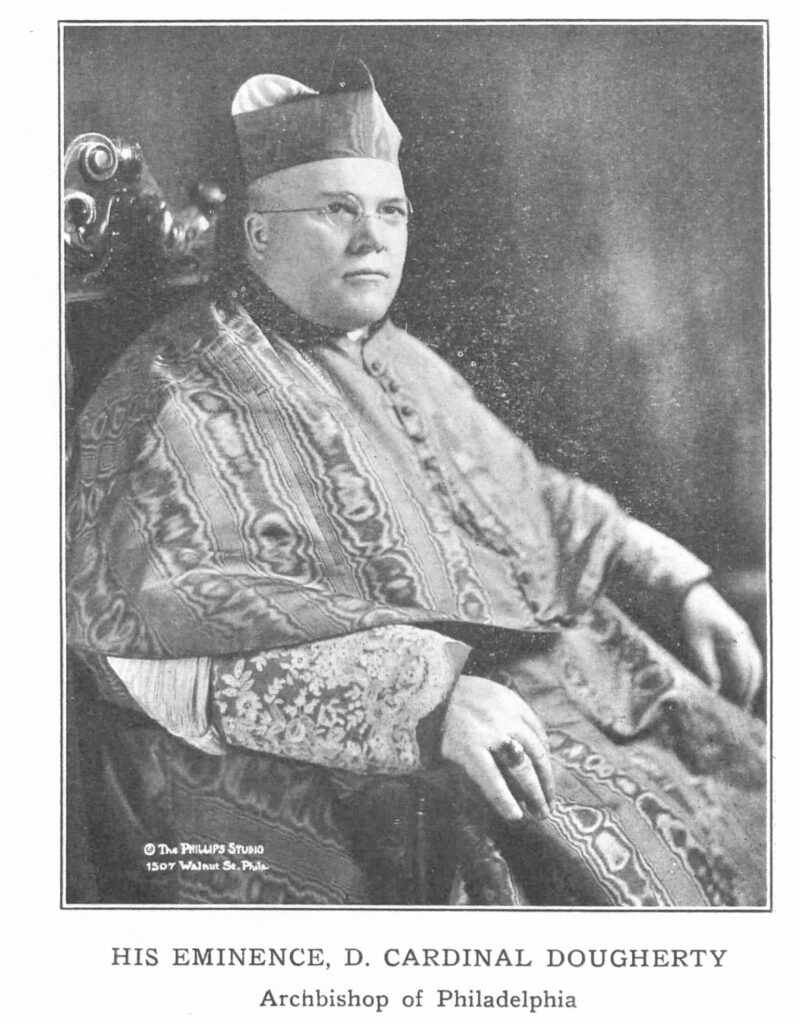 His Eminence Dennis Cardinal Dougherty
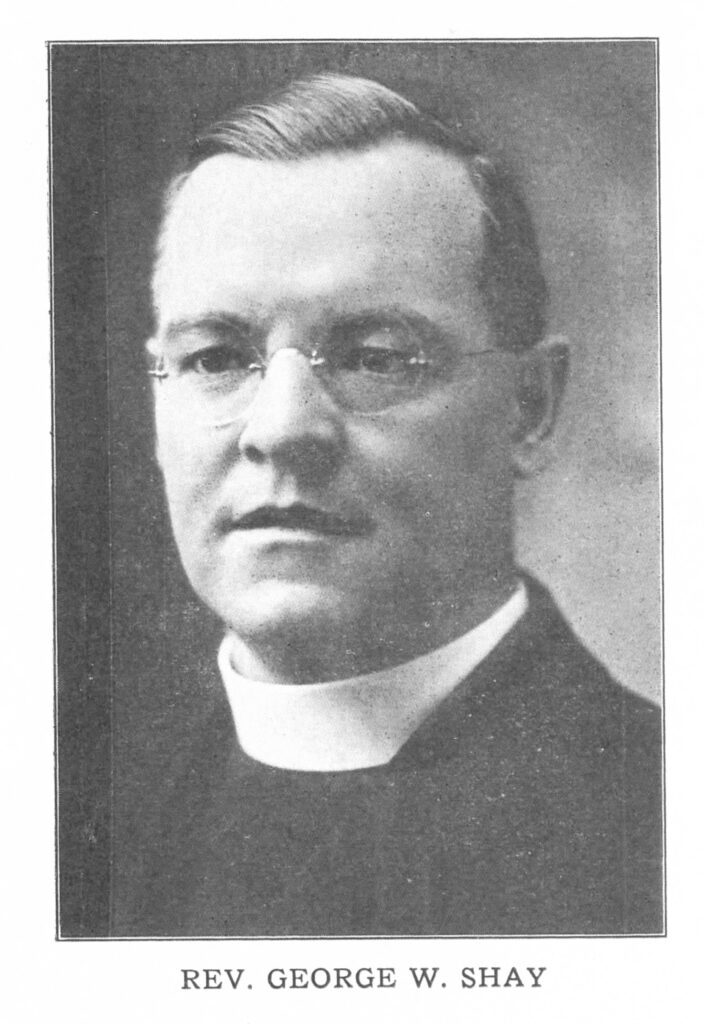 Rev. George W. Shay
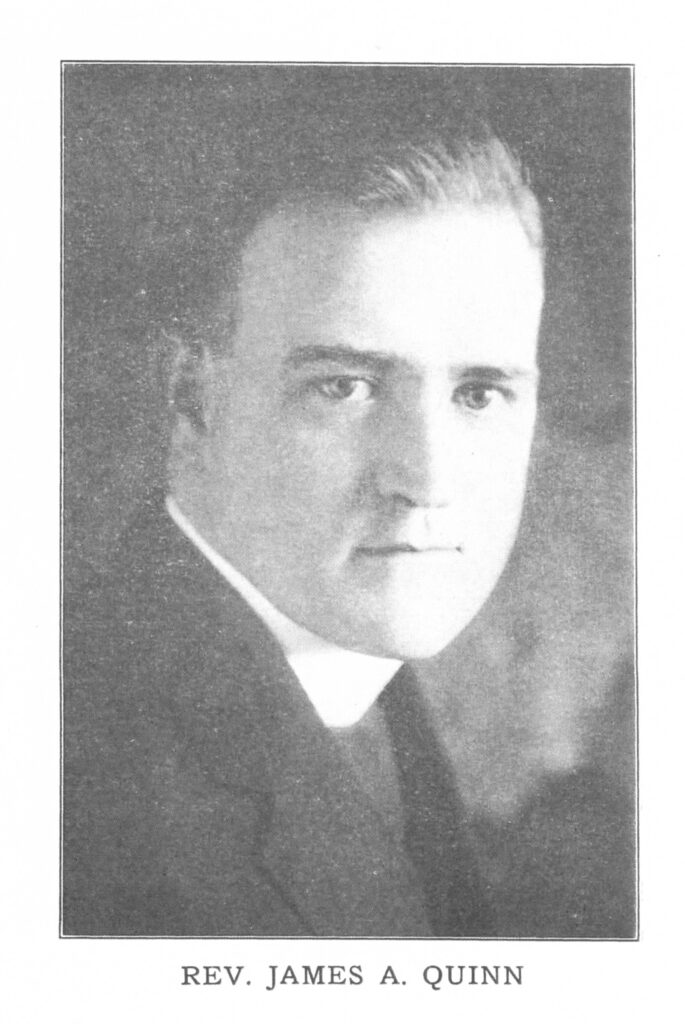 Rev. James A. Quinn
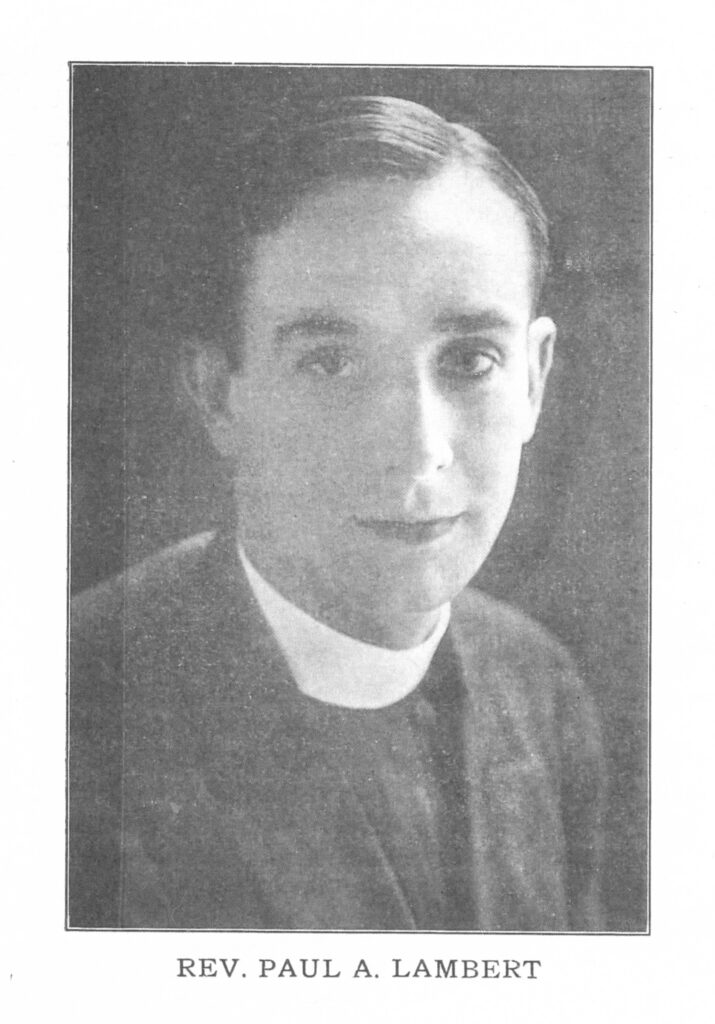 Rev. Paul A. Lambert
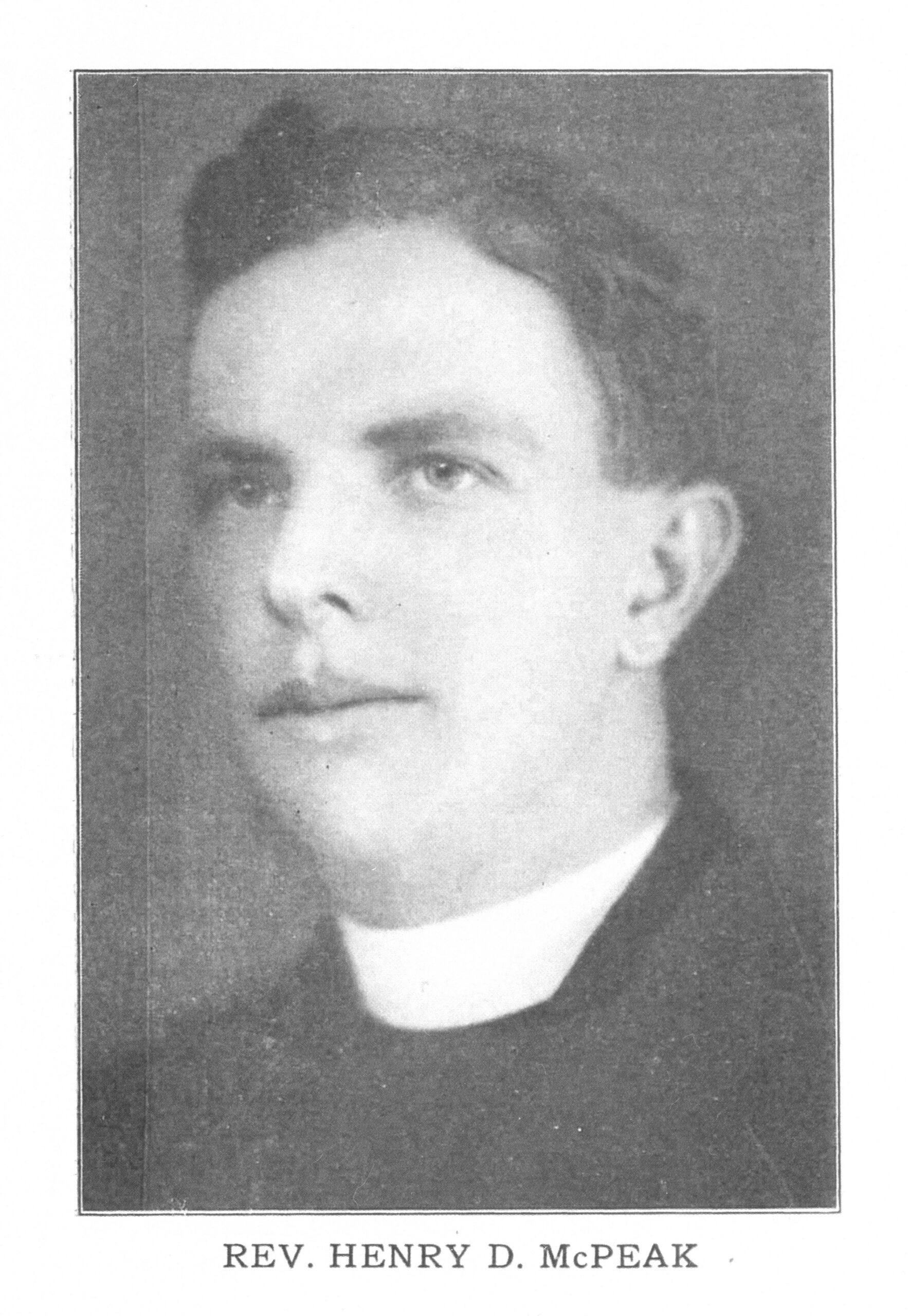 Rev. Henry D. McPeak
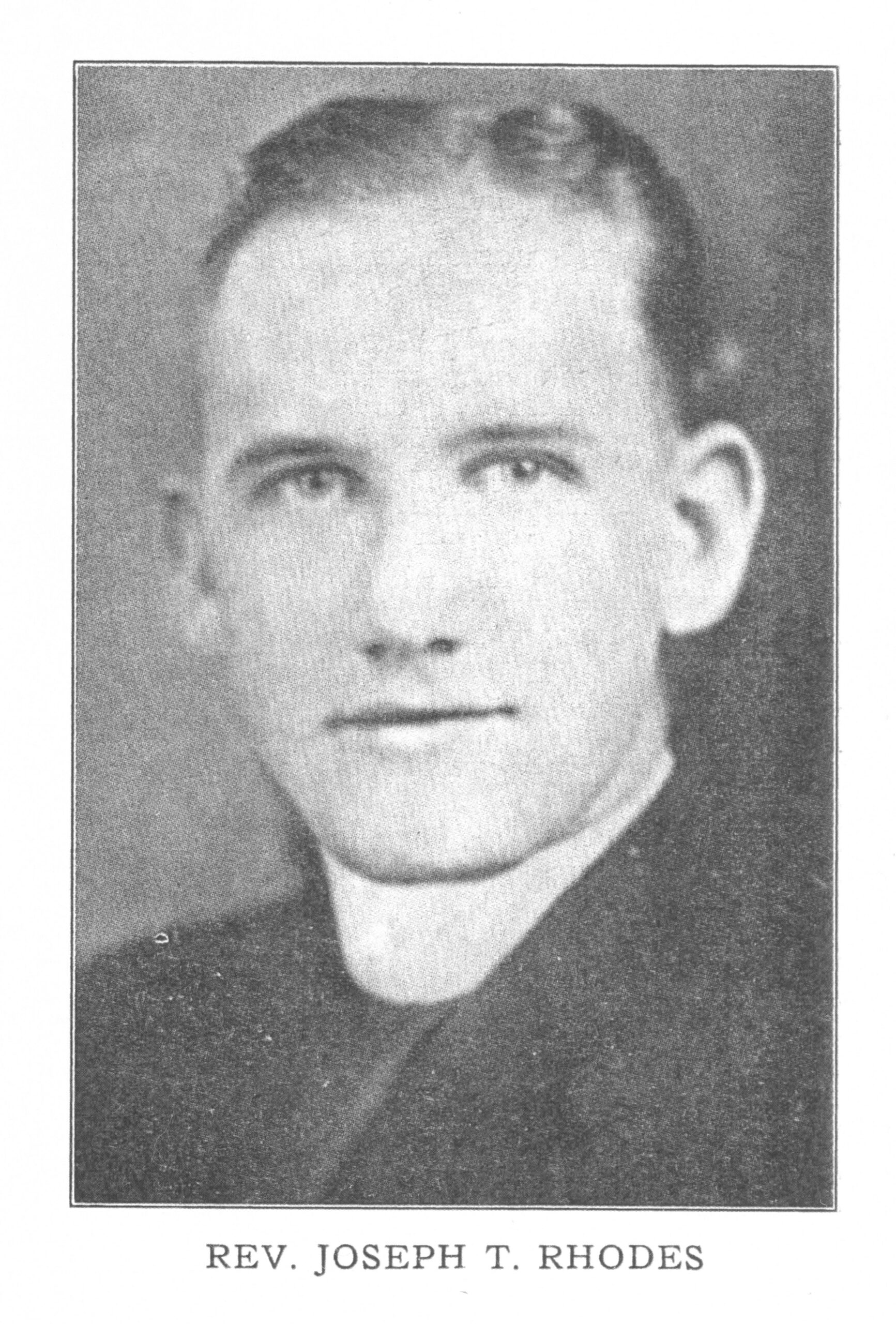 Rev. Joseph Rhodes
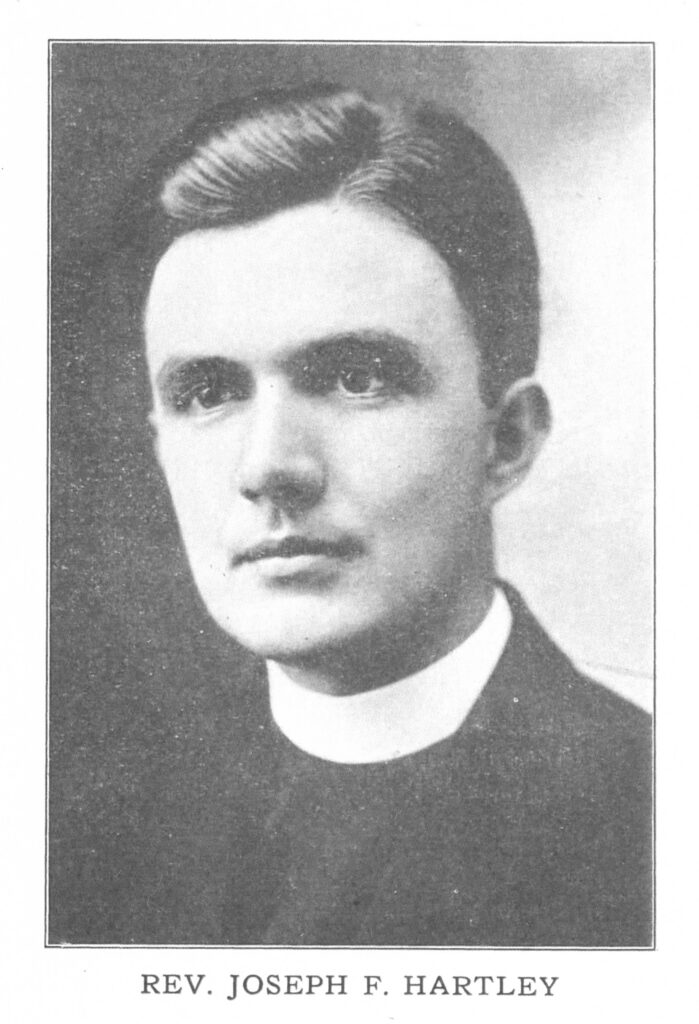 Rev. Joseph P. Hartley
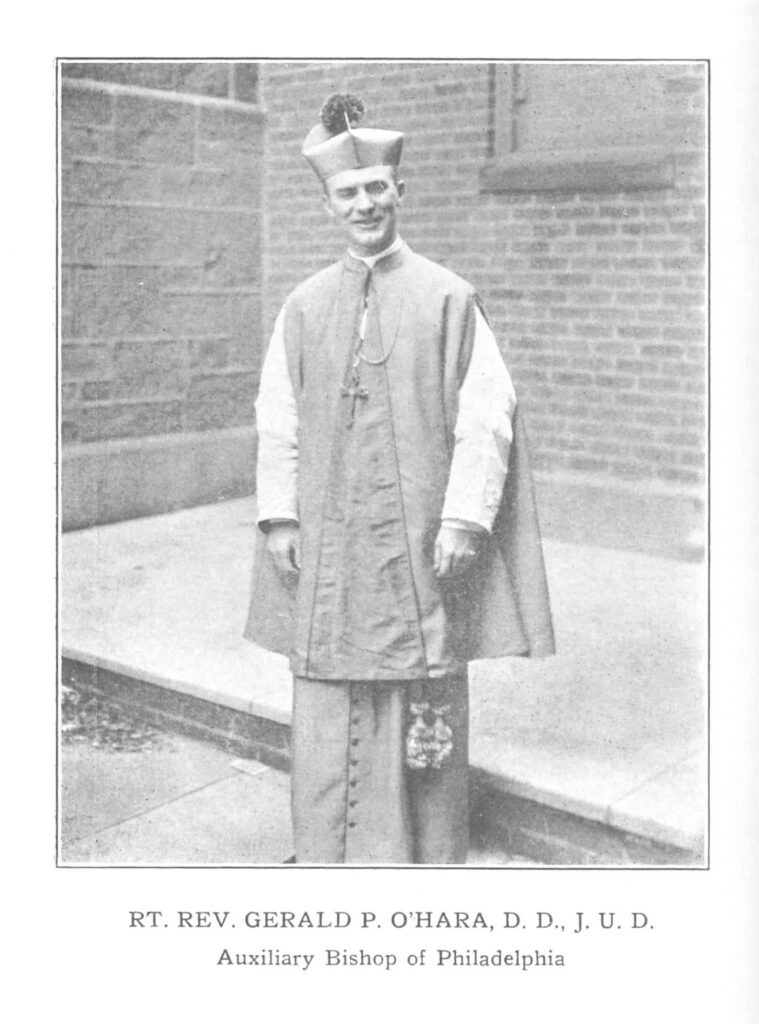 Rt. Rev. Gerald P. O’Hara, D.D., J.U.D.
Pastors and parish administrators:Pastors and parish administrators:
|
Name |
Role |
Years / date documented |
Public note |
|---|---|---|---|
|
|
Founding pastor / rector |
May 1920–June 1932 |
Rev. George W. Shay, the founding pastor of Mary Queen of Peace, was appointed on May 4, 1920. During his pastorate, the parish grew from the newly acquired Seltzer property into a vibrant Catholic community with a rectory, convent, school, and chapel. Father Shay fostered parish organizations, supported the ministry of the Sisters of the Immaculate Heart of Mary, and extended pastoral care to the Mount Laffee mission. Under his leadership, plans were initiated for the construction of the present church, which was dedicated in 1929. |
|
|
Pastor / rector |
June 1932–August 1933 |
Served as pastor following the founding pastorate of Rev. George W. Shay. His brief pastorate came during the early years of the present church building, which had been dedicated only a few years earlier in 1929. |
|
|
Pastor / rector |
August 1933-August 1955 |
Guided the parish through more than two decades of growth, including the Depression, World War II, and the postwar years. His long pastorate helped provide stability during an important period in the parish’s early history. |
|
|
Pastor / rector |
August 1955-December 1961 |
His pastorate came during the final years of the parish’s time within the Archdiocese of Philadelphia and immediately before the creation of the Diocese of Allentown in 1961. Father Foley helped guide Mary Queen of Peace through the postwar parish era, when the community continued to be supported by its school, convent, parish organizations, and growing neighborhood life. |
|
|
Pastor; later Pastor Emeritus |
December 1961-September 1970 |
Guided the parish through a period of significant transition following the establishment of the Diocese of Allentown and the liturgical reforms of the Second Vatican Council. During his pastorate, the parish adapted to changes in Catholic worship, renovations were undertaken within the church, and difficult decisions were made regarding the closure of the parish school and the eventual removal of the former convent and school buildings. Father McNulty also initiated remodeling projects that would continue under his successor, Rev. Thomas L. Edwards. In May 1987, he returned to Mary Queen of Peace to celebrate his Golden Jubilee as a priest. |
|
|
Pastor / rector |
September 1970–May 1977 |
Rev. Thomas L. Edwards served as pastor during the early 1970s. During his tenure, Mary Queen of Peace celebrated its Golden Jubilee, and renovations begun under Rev. Charles L. McNulty continued, including sanctuary improvements and the installation of new pews. Father Edwards later served at St. Joseph’s in Reading, another church designed by G. C. Freeman of Reading. |
|
|
Pastor |
May 1977-May 1984 |
Served as pastor from 1977 to 1984. During his pastorate, the parish expanded lay ministries, including Extraordinary Ministers of Holy Communion and charismatic services. In 1982, Deacon Stephen Andrusisian, a member of the first class of Permanent Deacons ordained for the Diocese of Allentown, was assigned to Mary Queen of Peace. On March 8, 1983, Bishop Thomas J. Welsh celebrated his installation Mass as Bishop of Allentown at the parish. |
|
Rev. Charles A. Marciano |
Pastor |
1984–1987 |
During his pastorate, groundbreaking ceremonies for the Queen of Peace Apartments were held on August 18, 1984, and the Rite of Dedication was celebrated on November 19, 1985. On March 9, 1986, Bishop Thomas J. Welsh blessed sixteen new stained-glass windows and four church doors during a dedication Mass. That same year, parishioners Cyril A. Roth and Carl J. Roos entered the Permanent Diaconate Program for the Diocese of Allentown. In May 1987, Rev. Charles J. McNulty celebrated his Golden Jubilee as a priest. |
|
Rev. Charles J. Dene |
Pastor |
1987-1989 |
Instrumental in establishing the prison ministry at the Schuylkill County Prison. Mass was celebrated on the first Monday of each month for the male inmates, while Eucharistic services were held on the fourth Sunday of each month for the female residents. Father Dene devoted many hours to this ministry, providing pastoral care and helping inmates turn their lives around. |
|
Rev. James J. Mihalak |
Pastor |
September 5, 1989–1997 |
Rev. James J. Mihalak served as pastor from 1989 to 1995. During his pastorate, significant improvements were made to both the church and rectory. Exterior projects included new concrete work in front of the church, landscaping around the rectory, and painting of both buildings. Interior renovations included the installation of a new heating system and the replacement of sanctuary and aisle carpeting with Spanish tile flooring. Father Mihalak revitalized adult religious education, encouraged the revival of the Holy Name Society, promoted the Chaplet of Divine Mercy, and reintroduced Exposition of the Blessed Sacrament on the First Fridays of Lent. In November 1993, Mary Queen of Peace hosted a parish mission that brought the community together in renewal and prayer. |
|
Rev. Bernard F. Flanagan |
Pastor / parish administrator |
1997–2003 |
Served after Father Mihalak. |
|
|
Final pastor before suppression |
2003–July 2008 |
Served as pastor of Mary Queen of Peace during the parish’s final years as an active territorial parish. During his pastorate, the Diocese of Allentown undertook a process of parish consolidation that resulted in the closure of Mary Queen of Peace as a parish community. The final parish Mass was celebrated on July 13, 2008, marking the end of nearly nine decades of continuous parish life. Although the parish was suppressed and closed, the faith and devotion of its parishioners endured and ultimately contributed to the preservation efforts that led to the reopening of Mary Queen of Peace as a chapel years later in 2025. |
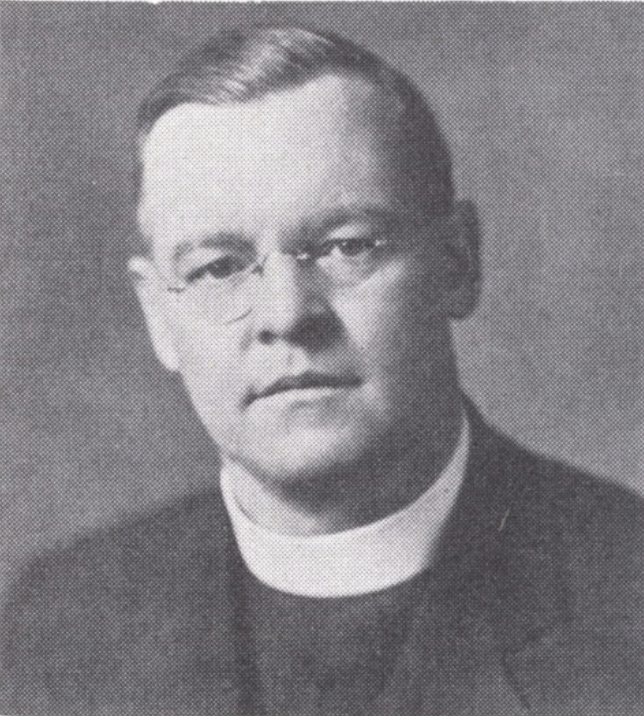 Rev. George W. Shay
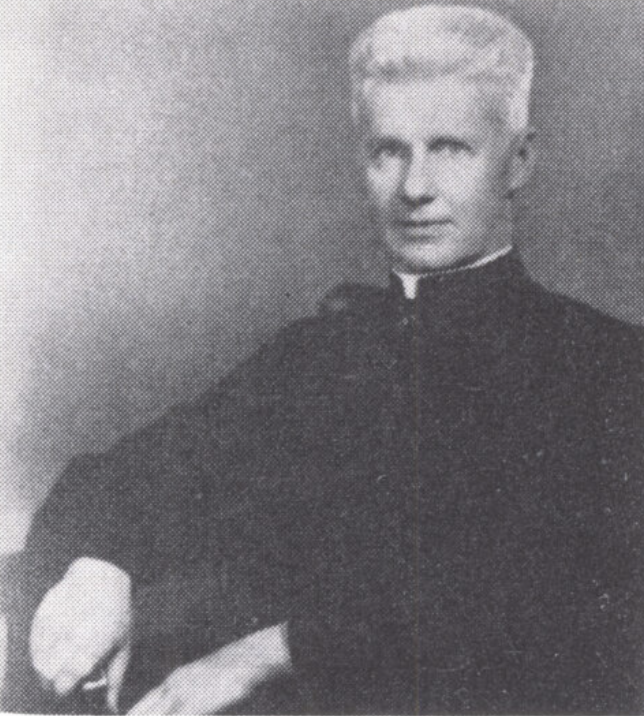 Rev. Cornelius F. Burke
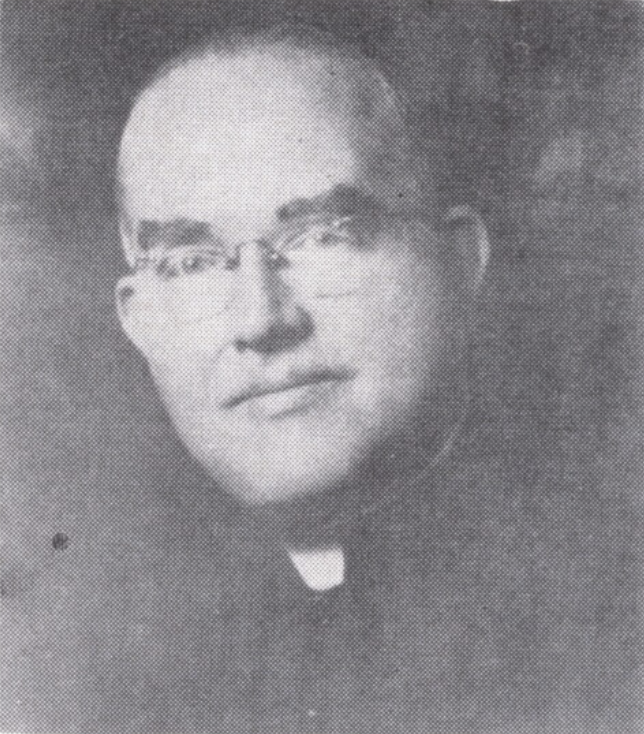 Rev. John V. Brogan
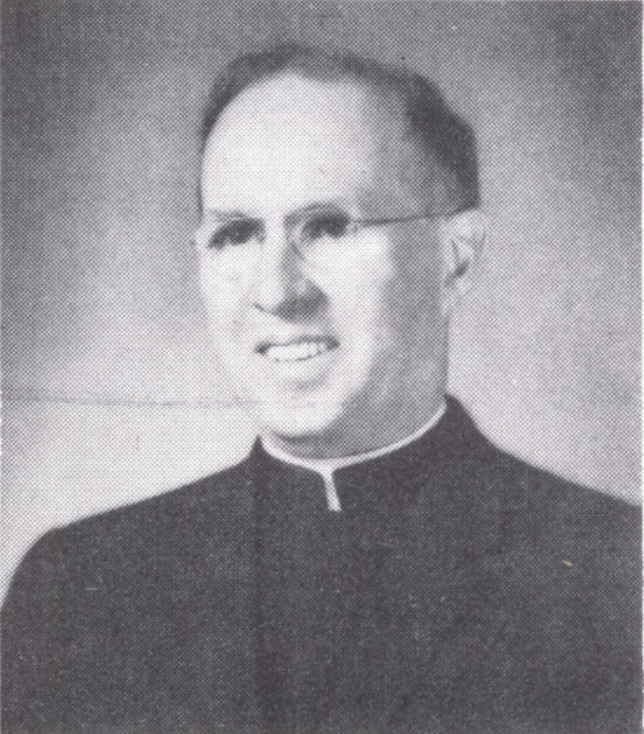 Rev. Patrick J. Foley
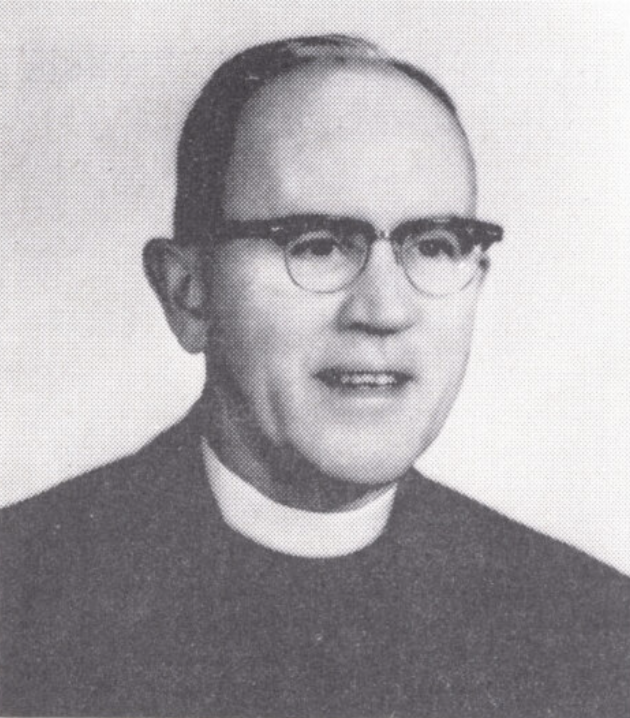 Rev. Charles L. McNulty
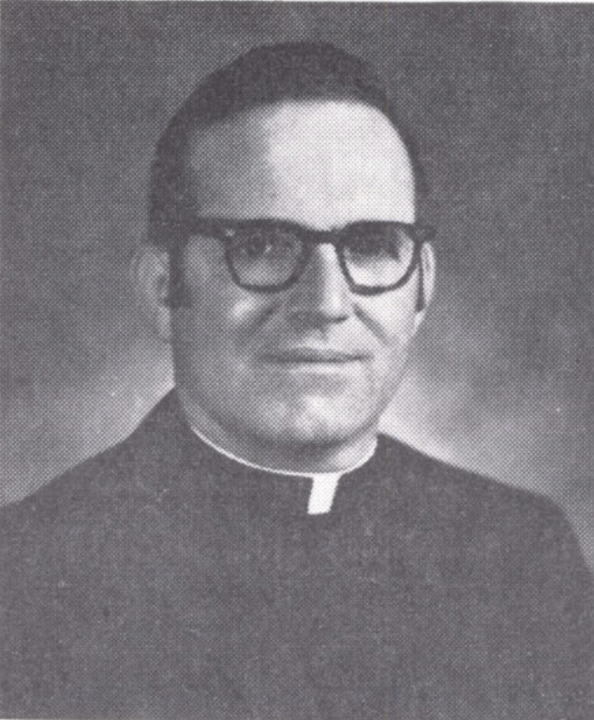 Rev. Thomas L. Edwards
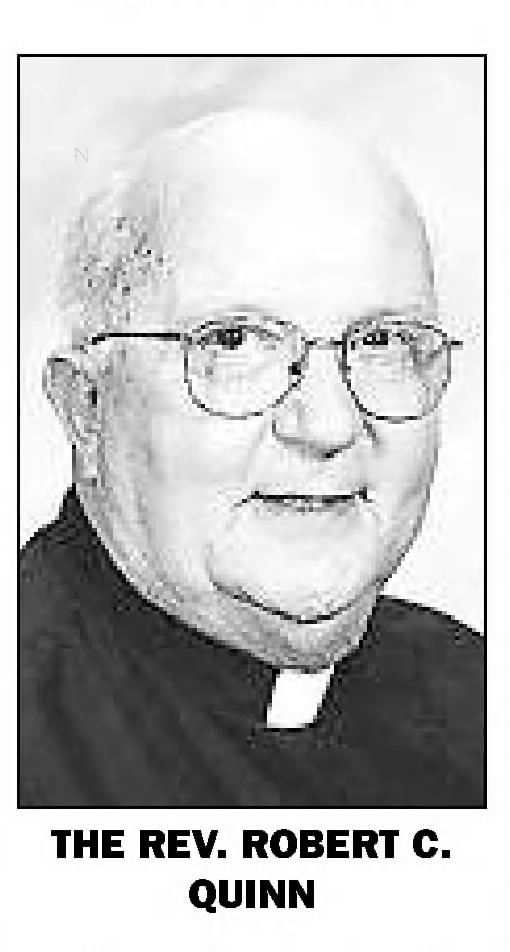 Rev. Robert C. Quinn
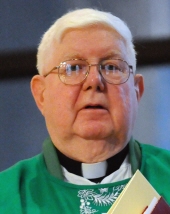 Rev. John W. Bambrick
Bishops connected to major parish milestones:
|
Name |
Role |
Date / period |
Public note |
|---|---|---|---|
|
Dennis Cardinal Dougherty |
Archbishop of Philadelphia |
1919; April 11, 1929 |
Established the parish by direction in 1919 and laid the cornerstone of the present church in 1929. |
|
Bishop Michael J. Crane |
Auxiliary Bishop of Philadelphia |
1922, 1925, 1928 |
Administered Confirmation during the early parish years, including at Little Flower Chapel in Mt. Laffee on May 21, 1928. |
|
Rt. Rev. Gerald P. O’Hara |
Auxiliary Bishop of Philadelphia |
August 25, 1929 |
Dedicated the present church. |
|
Bishop Thomas J. Welsh |
Bishop of Allentown |
May 12, 1985 |
Rededicated Mary Queen of Peace in 1985. |
|
Bishop Ronald W. Gainer |
Mary Queen of Peace School alumnus; later bishop |
1995 anniversary context |
Mary Queen of Peace School alumnus; later Bishop of Lexington and Bishop of Harrisburg. Attended Mary Queen of Peace Grade School before continuing to Nativity B.V.M. High School. He is remembered in the parish’s later history as a distinguished alumnus and appears in 75th anniversary materials connected with the parish community. |
Deacons and chapel spiritual leadership:
|
Name |
Role |
Years / date documented |
Public note |
|---|---|---|---|
|
Permanent Deacon Stephen Andrusisian |
Permanent Deacon |
documented by 1985; 1995 anniversary context |
Honored in connection with the 1985 rededication and remembered in later anniversary materials. |
|
Chapel Chaplain |
Awaiting Appointment |
2025–2026 |
Chaplain role is awaiting appointment by the Diocese of Allentown. |
Support The Chapel
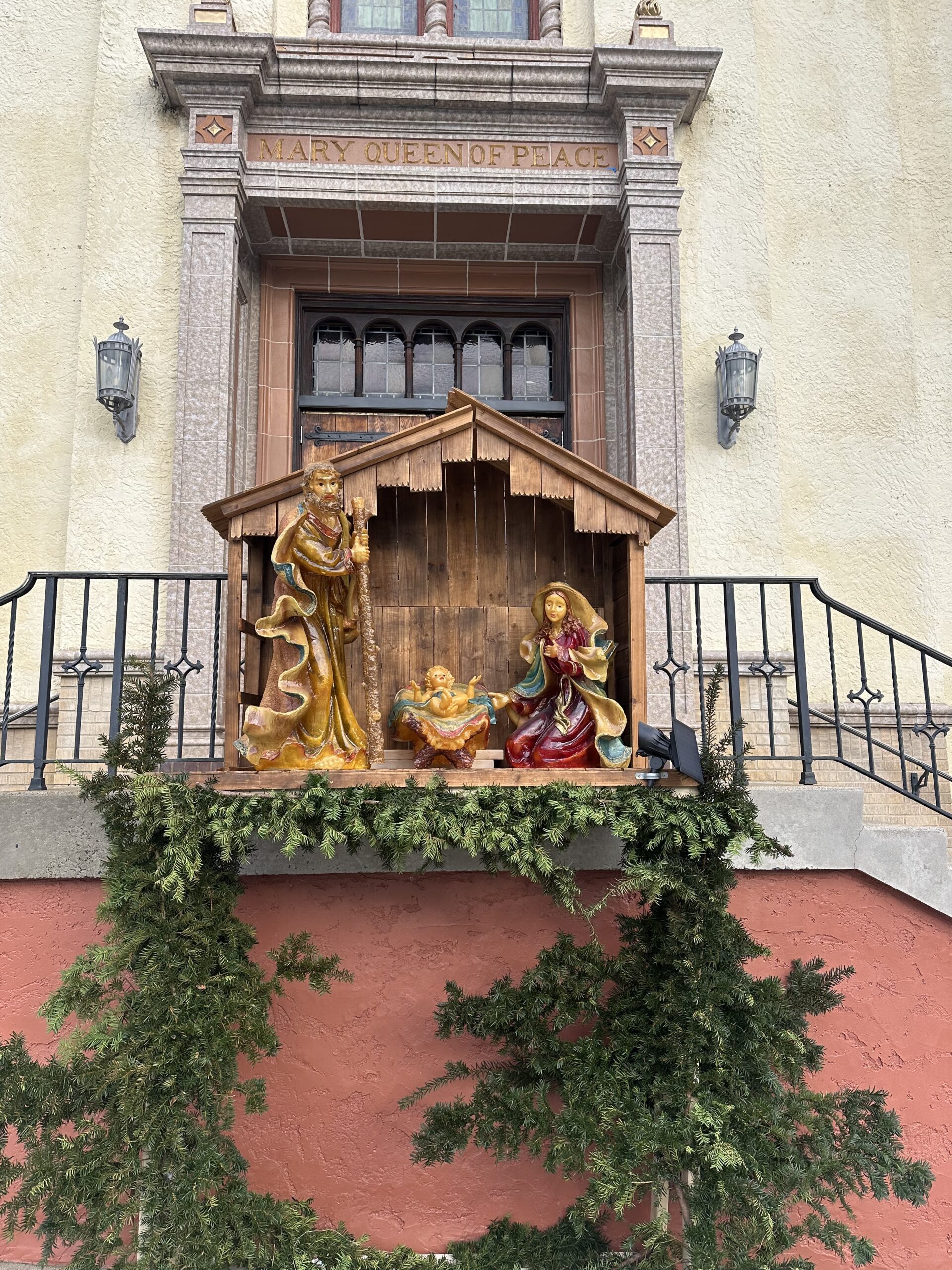
Your generous contributions play a vital role in maintaining the spiritual and historical legacy of the Catholic Chapel of Mary Queen of Peace. By donating, you help preserve, maintain, and operate this sacred space and support community activities. Every gift, no matter the size, makes a difference in sustaining our chapel's future.
The Society receives no funding from the Diocese of Allentown and is fully financially independent. As owner and steward of Mary Queen of Peace, the Society relies on the generosity of supporters to sustain the chapel’s ongoing operations, preservation, and mission.
The Society of Mary Queen of Peace of Pottsville, Inc. is a Pennsylvania nonprofit corporation and IRS-recognized 501(c)(3) public charity (EIN: 33-1603537). By decree of the Diocese of Allentown, the Society is recognized as a Private Association of the Christian Faithful and is authorized to identify itself as Catholic in carrying out its mission of preserving Mary Queen of Peace as a Catholic sacred space for prayer, devotion, and community benefit. Contributions are tax-deductible to the extent permitted by law.