Mary Queen of Peace Church: An Archival History
1910 to 1919
A documented narrative of the parish, sacred space, and preservation effort in Pottsville, Pennsylvania.
Mary Queen of Peace Prologue & the 1910s
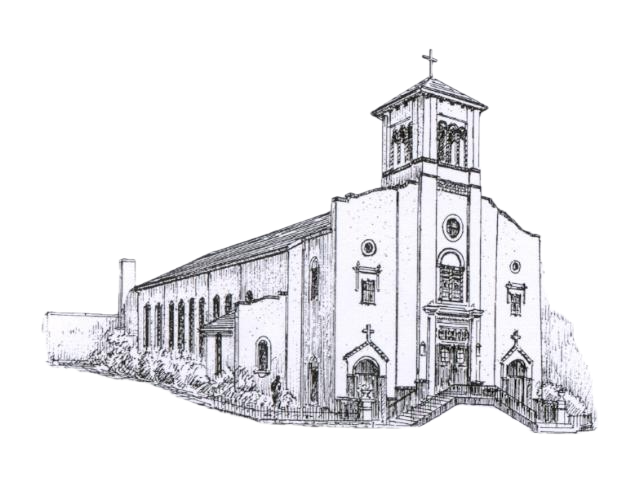
For more than a century, Mary Queen of Peace has been a witness to the Catholic faith in Pottsville, Pennsylvania. Established in 1919 to serve the Catholics of Fishbach, Jalappa, New Street, Mt. Laffee, and the northern section of the city, the parish became a spiritual home where generations of the faithful gathered for the Holy Sacrifice of the Mass, received the sacraments, practiced works of charity, educated their children in the Catholic faith, and grew together in the life of the Church. Its history encompasses the early Catholic communities of North Pottsville and Mt. Laffee, worship in school buildings and the Little Flower Chapel, the construction and dedication of the present Spanish Mission-style church in 1928–1929, decades of vibrant parish life, the parish’s consolidation in 2008, the church’s closure in 2021, and its remarkable reopening in 2025 as a Catholic chapel under the care of the Society of Mary Queen of Peace of Pottsville.
This history is presented chronologically by decade so that additional photographs, archival documents, newspaper accounts, and family memories may be incorporated as they become available. In doing so, we hope to preserve not only the history of a parish and its buildings, but also the enduring witness of the Catholic faith lived by generations of the faithful who called Mary Queen of Peace their spiritual home. Contributions to this ongoing historical archive are always welcome. Contributions can be made here.
Prologue
The history of Mary Queen of Peace begins with the Catholic families of northern Pottsville and the nearby communities of New Street and Mount Laffee. Long before they had a parish of their own, these families traveled to the older churches for Mass and the sacraments, supported their congregations, and sought a place of worship nearer home. Their efforts would lead to a new parish in 1920, following the appointment of its first pastor and approval of its name in December 1919. [1, 2, 3]
The chapters that follow trace the life of that community through its people, places of worship, schools, and shared work. Parish records and correspondence stand alongside newspaper accounts, directories, photographs, and the recollections preserved in anniversary histories. Together they tell how a congregation took shape and how its life became part of the wider Catholic history of Pottsville and Schuylkill County. The opening decade introduces the neighborhoods and older parishes from which Mary Queen of Peace emerged. [4]
That beginning belongs to the Archdiocese of Philadelphia. Throughout the 1910s, Pottsville and Schuylkill County lay within its jurisdiction, and Archbishop Dennis Dougherty directed the preparations for the new parish. Mary Queen of Peace would remain under Philadelphia until January 28, 1961, when Schuylkill and four other counties became the Diocese of Allentown. [5]
North Pottsville remained at the heart of MQP’s life, but the parish’s story also reaches into neighboring townships. A boundary schedule preserved in Ronald Gainer’s 1971 history explicitly includes parts of Norwegian Township and New Castle Township. Later parish recollections identify Brookshire, Seltzer, Deer Park, Norwegian Woods, Woodland Acres and Peach Mountain among the communities connected with MQP. These places belong in the wider history as it unfolds; the later neighborhood list should not be read as a description of the settlements or parish boundaries in 1919. [28, 39]
Earlier worship and the future parish site
Mount Laffee brought its own history of local worship into the future parish. The 1929 dedication booklet recalled parents and grandparents walking approximately three miles to Pottsville in summer and winter, sometimes twice on a Sunday. It also remembered their requests for a chapel closer to home. These are recollections of earlier generations, rather than a record of every family’s Sunday routine. [6]
Mass had been celebrated in school buildings before MQP was organized. The dedication booklet credited Father D. I. McDermott with the first Mass in the old stone schoolhouse at the top of Mount Laffee hill. Worship later moved to a frame school, with the township school board permitting access to its buildings. Several attempts to establish a separate chapel had been abandoned. The date of that first schoolhouse Mass remains uncertain: the 1929 booklet placed it more than fifty years earlier, while Gainer gave 1885. Both accounts preserve a tradition of Catholic worship at Mount Laffee predating Mary Queen of Peace. [7]
The deed executed when the parish acquired property in April 1920 places the site in Pottsville’s Sixth Ward, at North Centre and Temple Streets. It traces part of the title to a conveyance by Conrad Seltzer and his wife on March 23, 1877. That earlier transaction is known here from the later deed’s recital. [8]
A June 1927 parish typescript recalled the group of buildings acquired for MQP: the old Seltzer homestead, which became the rectory; a house occupied by Mr. Seltzer’s son; two frame buildings; and the former home of dentist Dr. J. W. Seltzer. It remembered the frame buildings as an old tavern and stagecoach stopping place on the route toward Ashland, and the site of the first chapel as former cattle sheds. It also recalled cavalry drilling in the open ground during the Civil War. The tavern, stagecoach, and cavalry accounts survive as local memories recorded in 1927 and still await independent contemporary corroboration. [9]
1910
Catholic life in northern Pottsville
At the opening of the decade, the need for a nearer church was already part of the story later told about MQP’s foundation. The 1929 dedication history recalled overcrowding at St. Patrick’s and the considerable journey to St. John’s for residents of Fishbach and Jalappa. The pastors of both churches had recognized the need for a separate place of worship in the northern district, but earlier plans had not come to fruition. The parish’s 1970 anniversary history likewise remembered families making the journey through the changing seasons. These accounts describe a longstanding concern; they do not date a particular proposal to 1910. [1, 2]
The older churches remain useful landmarks for understanding that geography. St. Patrick’s is at 319 Mahantongo Street, at Fourth and Mahantongo Streets. St. John the Baptist is at 913 Mahantongo Street, at Tenth and Mahantongo Streets. St. Joseph’s occupied the former St. John’s church at the southeast corner of South Fourth Street and Howard Avenue. All three locations are in Pottsville, Pennsylvania 17901. The Fourth Street and Howard Avenue site should be distinguished from St. John’s later church on Mahantongo Street. [10]
Language helped shape parish life as well as distance. Ronald Gainer’s 1971 history identifies St. John the Baptist as a German national parish and St. Joseph’s as an Italian national parish. It describes St. Patrick’s as the mother parish from which MQP’s northern territory was eventually separated. St. Patrick’s territorial role and Irish heritage should not be confused with a formal designation as an Irish national parish. The overlapping importance of neighborhood, language, and family ties would remain part of the new parish’s early life. [11]
The Seltzer property on North Centre Street
The property that would become the parish home was still associated with the Seltzer family and its businesses. Boyd’s 1909–1911 directory lists William H. Seltzer, president of the Seltzer Packing Company, at 728 North Centre Street. Dentist J. Walter Seltzer appears at the same home address, with his office at 22 South Centre Street. The packing company’s pork and beef business stood at Water and Temple Streets. The directory provides a contemporary view of the neighborhood around the opening of the decade, although it does not date construction of the house that became the rectory. [12]
1911-1912
Parish language and devotional life
An April 1912 diocesan synod provided a rule that would later help clarify the relationship between MQP and St. John’s. As Archbishop Dougherty explained in a May 1920 letter, the rule recognized the right of foreign-born Catholics who knew English to join an English-language church. It also recognized a corresponding right for American-born children of non-American parents speaking another language once emancipated. This provision would become relevant when German families began attending the new MQP chapel. [13]
English-language ministry was already present within St. John’s German parish. Its 1917 anniversary history records a mission conducted by Jesuit Fathers Herman Elskamp and John Spirig from September 8 to 22, 1912, with evening sermons in English. Earlier missions had included German sermons. The account documents the language of those evening services without suggesting that all parish worship changed language or that St. John’s national-parish identity ended. [14]
On October 20, assistant pastor Father Henry John Steinhagen introduced senior and junior Holy Name societies with the permission of pastor Father Frederick William Longinus. The first senior reception admitted 125 men. Organized lay devotion was thus an established part of life at one of the churches connected with families in MQP’s future district. The account does not identify which members later joined Mary Queen of Peace. [15]
1913-1915
St Joseph and the surrounding communities
St. Joseph’s Italian ministry extended beyond Pottsville. According to the institutional history of the Shrine of St. Thérèse, the church in Little Italy, near Nesquehoning, had become a mission of St. Joseph’s in 1906. Archbishop Prendergast raised it to a parish in its own right in November 1913. The relationship places Pottsville’s Italian congregation within a wider regional Catholic community; it does not supply a complete boundary description for St. Joseph’s. [16]
1916
George W. Shay comes to Branchdale
The priest who would organize Mary Queen of Peace became pastor at Branchdale in 1916. A profile published in the Catholic Standard & Times in May 1920 described George W. Shay as a Pottsville native trained at St. Charles’ Seminary. Before Branchdale, he had served at All Saints’ Chapel, the Philadelphia Protectory, and Our Lady of the Rosary. Those assignments brought both Philadelphia experience and a Schuylkill County pastorate into the work he would undertake in his native city. [17]
1917
A prayer for peace
During the First World War, the title Queen of Peace received a particular place in Catholic prayer. On May 5, 1917, Pope Benedict XV instructed Cardinal Pietro Gasparri to inform the bishops that the invocation Regina pacis, ora pro nobis—Queen of Peace, pray for us—was to become a permanent part of the Litany of Loreto beginning June 1. The pope appealed to the faithful to seek Mary’s intercession for an end to the conflict. The title therefore carried a documented wartime association before Shay proposed it for the Pottsville parish. [18]
The people of St John the Baptist
St. John’s anniversary history, published that year, looked back to the families who had established a church for German-speaking Catholics. They had come from Pottsville and several surrounding communities, including Mount Laffee. The book also identified the old church at Fourth Street and Howard Avenue as the place of worship of an Italian-speaking congregation. Its account connects the German and Italian parishes with the same regional communities that would help shape MQP, although the places named for St. John’s founding generation do not establish its precise boundaries in 1917. [19]
The anniversary account also described the parish’s continuing work. The senior Holy Name Society, which had admitted 125 men in 1912, had grown to a reported 375 members. St. John’s St. Vincent de Paul Society provided money, groceries, and other necessities discreetly to families in need, supported by a collection on the first Sunday of each month. Such activities preserve a view of prayer and mutual assistance within the older Catholic community. [15]
1918
The sisters respond to influenza
The influenza epidemic brought emergency service and suffering to Pottsville in October 1918. An account compiled from the sisters’ own reports and published the following year records eight Sisters of St. Joseph from St. Patrick’s Convent and six from St. Mary’s in St. Clair nursing in the city’s hospitals. Sisters of the Immaculate Heart arrived from Philadelphia on October 10 and were welcomed at St. Patrick’s Convent. Their number eventually increased from ten to fourteen. [20]
The sisters worked day and night at Pottsville General Hospital, the Armory Emergency, and the Milliken Home Emergency. Their reports describe care for stricken households as well as hospital patients, including efforts to find priests who could minister to people in their own languages. In the year before preparations for MQP began, the older parishes and religious communities were responding to a crisis that reached into homes across the city. [21]
St. Patrick’s also contributed to the archdiocese’s seminary during the epidemic year. In its April 1919 report of the 1918 collection, the Catholic Standard & Times credited the parish with $1,013.10, second among the churches outside Philadelphia in its published ranking. Speakers linked increased giving across the archdiocese with gratitude for the service of priests and seminarians during the influenza emergency. The collection belongs to St. Patrick’s before MQP’s formation and records another aspect of the diocesan life from which the new congregation emerged. [22]
1919
The older parishes and their schools
As the decade drew to a close, the Official Catholic Directory placed Pottsville’s churches within its Archdiocese of Philadelphia section. It named Monsignor Francis J. McGovern at St. Patrick’s and Father Frederick W. Longinus at St. John the Baptist’s, identifying St. John’s as German and St. Joseph’s as Italian. Boyd’s 1919–1921 city directory corroborates the church locations at Fourth and Mahantongo, Tenth and Mahantongo, and Fourth and Howard. These contemporary entries confirm the distinctions recalled in the parish histories. [23]
The Catholic Directory names Father Giovandoménico DeStefano as rector of St. Joseph’s, with his residence at 321 West Howard Avenue. It lists Santa Barbara in Minersville as a mission attended every Sunday. Alongside the earlier Nesquehoning connection, this provides a specific example of St. Joseph’s regional ministry; neither mission is identified as one inherited by MQP. [24]
The older congregations also sustained Catholic schools. St. Patrick’s reported 193 boys and 227 girls, a total of 420 pupils, taught by the Sisters of St. Joseph. St. John’s reported 160 boys and 161 girls, a total of 321, taught by the Sisters of Christian Charity. These are the enrollments printed in the 1919 directory, rather than a count of children who would later belong to MQP. They show the established place of parish education before the new congregation opened a school of its own. [24]
The Seltzer addresses at the end of the decade
Boyd’s 1919–1921 edition provides a later view of the future parish neighborhood. Margaret, Roy M., Stewart G., and William G. Seltzer appear at 728 North Centre Street. J. Walter Seltzer’s home is listed at 738 North Centre Street and William H. Seltzer’s at 411 Garfield Square, while the packing business remains at Water and Temple. The edition span does not establish exact moving dates or continuous occupancy through 1921. Read alongside the deed and parish recollections, these entries distinguish the family’s several addresses around the time of the transition to parish ownership. [25]
Preparing a new parish
By December, consultation about a northern parish had reached Archbishop Dougherty’s office. The Catholic Historical Research Center’s finding aid lists a December 1, 1919 letter from Dougherty to McGovern concerning a proposed parish at Fishbach, spelled “Fishback” in the entry. The catalogue describes the archbishop seeking McGovern’s “assent or dissent.” The original letter remains unexamined, so neither McGovern’s answer nor the proposal’s full terms can yet be supplied. [26]
According to the 1929 dedication history, Monsignor James Nash, a native of Fishbach, and Father Daniel McGettigan of Philadelphia were directed to examine the territory and establish proposed boundaries. The booklet reports that a December 13, 1919 letter directed the establishment of a new parish with its headquarters at Fishbach and a mission at Mount Laffee. Its description began at Centre and Nichols Streets, placed the city territory north of Nichols Street, and included New Street and Mount Laffee. The December 13 directive is known here through that later account. [27]
The new parish’s territory was separated from St. Patrick’s, while St. John’s retained its distinct national-parish role. Gainer’s 1971 history prints a more detailed boundary schedule covering parts of Pottsville, Norwegian Township and New Castle Township, but does not expressly date that schedule to 1919. It cannot therefore stand in place of the original founding boundaries. [28]
Shay was still rector of St. Mary Star of the Sea in Branchdale, as the 1919 Catholic Directory independently records. [29] On December 15, he wrote from Branchdale to thank Dougherty for appointing him to the rectorship of the new parish to be formed in Pottsville. He promised to act immediately on the instructions he had received. This surviving letter confirms that the appointment and preparations were underway before the end of the year. [30]
Choosing the name and seeking land
In the same December 15 letter, Shay proposed St. Christopher as the new parish’s name, with Mary, Queen of Peace as his second choice, subject to the archbishop’s approval. He also intended to seek the help of John F. Whalen of Pottsville in securing ground and attending to the title. Patronage and property were being considered together as the new congregation took shape. [31]
Dougherty replied on December 17 that the parish could bear the title Queen of Peace. He also recommended approaching the land purchase through a lay intermediary, so that knowledge of its intended church purpose would not inflate the asking price. He distinguished between engaging Whalen as a lawyer, which could entitle him to a professional fee, and accepting help offered as a personal friend. In that latter capacity, the archbishop expressed strong confidence in him. [32]
On December 18, Shay acknowledged receipt of the letter selecting Queen of Peace. He confirmed that Whalen was acting as a personal friend and promised to forward his report when it was ready. The correspondence ended with wishes for Christmas and the New Year. The name was settled and the search for land was active, although the letters do not record a completed purchase. [33]
The parish later remembered its patronage in the light of the First World War. In his undated letter for the seventy-fifth anniversary, Father James J. Mihalak described Mary, Queen of Peace as a fitting title while memories of the war remained fresh and devotion associated with the reported apparitions at Fatima and prayer for peace was becoming better known. That reflection complements the title’s documented place in wartime prayer. The December 1919 letters establish Shay’s proposal and Dougherty’s approval, but give no explicit statement that the choice commemorated the war’s end or arose from Fatima. [34]
A parish for the northern communities
MQP’s foundation was organized around service to a territory and its communities. The evidence supports an English-language territorial parish rather than a foundation for one particular national group. When German families began attending its chapel in 1920, Shay asked whether Catholics of every nationality within its limits came under his jurisdiction. Dougherty’s reply of May 21 stated, “I have not dismembered Father Longinus’s parish,” and invoked the 1912 synodal rule. Families’ residence within MQP’s territory did not automatically end their affiliation with St. John’s. [13, 35]
A February 1921 Catholic Standard & Times overview likewise listed MQP among Dougherty’s new parishes before separately identifying newly formed foreign-speaking parishes. These distinctions concern parish organization and language; they do not establish the ethnic proportions of MQP’s founding congregation. The German families mentioned in Shay’s letter form part of that early history, alongside the community’s continuing ties to the older churches. [35]
Into 1920
The decisions of December gave the coming year its starting point: a pastor had accepted his assignment, the name Queen of Peace had been approved, and arrangements were underway to find a home for the congregation. [3] Separate conveyances from William H. Seltzer and Emma R. Seltzer followed in April 1920. The deed acknowledged the continued operation of the neighboring Seltzer Packing Company packing house, including the noise and fumes that occurred at times. The parish was taking root among existing homes and an active business. [36, 37]
For locating the surviving buildings, the present MQP church is at 730 North Centre Street, Pottsville, Pennsylvania 17901; 728 North Centre Street is the rectory and the address long associated with parish mail. Shay’s May 1920 correspondence bears 728 North Center Street. These addresses distinguish the later church from the rectory and from the first chapel adapted on the property. [38]
The 1929 dedication booklet dates Shay’s taking possession of the parish to May 4, 1920. It also names real-estate broker John W. Higgins alongside Whalen in the negotiations, without dating every step. The work ahead would turn the December plans into parish life: buildings prepared for worship, a congregation gathered, and a nearer church for the people of northern Pottsville and Mount Laffee. [37]
Source notes
[1] History of Mary Queen of Peace Parish, 1929-08-25, Printed p. 5; scan filename ends Booklet 7.jpg (MQP-B1929-P5).
[2] Golden Jubilee parish history, 1970-10-25, PDF p. 6; booklet title-page celebration October 25, 1970 (MQP-003); History of Mary Queen of Peace Parish, 1929-08-25, Printed p. 5; scan filename ends Booklet 7.jpg (MQP-B1929-P5).
[3] History of Mary Queen of Peace Parish, 1929-08-25, Printed p. 5; scan filename ends Booklet 7.jpg (MQP-B1929-P5); George W. Shay to the Archbishop of Philadelphia, 1919-12-15, PDF pp. 1–2 (MQP-C-19191215); Archbishop of Philadelphia to Father Shay, 1919-12-17, PDF p. 3 (MQP-C-19191217); George W. Shay to the Archbishop of Philadelphia, 1919-12-18, PDF pp. 4–5 (MQP-C-19191218).
[4] History of Mary Queen of Peace Parish, 1929-08-25, Printed p. 5; scan filename ends Booklet 7.jpg (MQP-B1929-P5); Golden Jubilee parish history, 1970-10-25, PDF p. 6; booklet title-page celebration October 25, 1970 (MQP-003).
[5] December 15–18, 1919 correspondence, MC78_80_8139.pdf (MQP-PH-C), PDF pp. 1–5; Archdiocese of Philadelphia, historical overview, https://archphila.org/about/; Diocese of Allentown, About, https://www.allentowndiocese.org/about (official pages accessed October 4, 2026). The Official Catholic Directory for 1922, printed p. 156, independently places MQP and the other Pottsville parishes under Philadelphia: https://archive.org/details/TheOfficialCatholicDirectory1922/page/n280/mode/1up. The directory is later corroboration, not a 1910 boundary decree. Dougherty became a cardinal on March 7, 1921; Archbishop is his title in the 1919 founding correspondence.
[6] Mount Laffee Chapel, 1929-08-25, Printed p. 11; scan filename ends Booklet 13.jpg (MQP-B1929-P11).
[7] Mount Laffee Chapel, 1929-08-25, Printed p. 11; scan filename ends Booklet 13.jpg (MQP-B1929-P11); Ronald Gainer, A History of Mary Queen of Peace, Pottsville, Pa., 1971-05-10, PDF pp. 5–8 (printed pp. 2–5), and PDF p. 28 (printed p. 25, Appendix A) (MQP-H1971).
[8] Seltzer conveyances to Archbishop Dougherty, 1920-04-20, PDF pp. 1–2 (printed pp. 478–479) and pp. 7–9; earlier-title recital and packing-house clause on PDF p. 1 (MQP-001).
[9] Mary Queen of Peace Parish typescript, 1927-06, Unnumbered typescript first page, paragraphs 1–2 (MQP-T1927-P1); Mary Queen of Peace Parish typescript, 1927-06, Unnumbered typescript third page, first paragraph; date at foot (MQP-T1927-P3).
[10] Church location reference check and Michael Rajchel’s address clarification, 2026-10-04, Location entries: https://www.stpatrickpottsville.org/ ; https://discovermass.com/church/st-john-the-baptist-german-pottsville-pa/ ; https://maryqpeace.org/ ; St. Joseph parish/rectory listing: https://unilocal.net/c/united-states/pa/pottsville/venues-event-spaces (MQP-LOCATIONS); Henry John Steinhagen, A Retrospect of St. John the Baptist’s Parish, 1842–1917, 1917, PDF pp. 14 and 16 (unnumbered printed pages), “Founding of St. John the Baptist’s Parish”; https://archive.org/details/stjohnbptpotts1917_images (MQP-SJ1917).
[11] Ronald Gainer, A History of Mary Queen of Peace, Pottsville, Pa., 1971-05-10, PDF pp. 5–8 (printed pp. 2–5), and PDF p. 28 (printed p. 25, Appendix A) (MQP-H1971).
[12] Boyd’s Directory of Pottsville, 1909–1911, printed p. 282, PDF p. 270, Seltzer entries; https://archive.org/details/boydsdirectoryof0000whbo_n6g6 (MQP-PUB-BOYD1909). Original page visually checked October 10, 2026. The OCR drops the first digit of the printed page number; the image reads 282. A directory address is not a building-construction date.
[13] George W. Shay to Archbishop Dougherty, 1920-05-20, PDF p. 10 (MQP-C-19200520); Archbishop Dougherty to George W. Shay, 1920-05-21, PDF p. 11; opening paragraph and quoted declaration (MQP-C-19200521).
[14] Henry John Steinhagen, A Retrospect of St. John the Baptist’s Parish, 1842–1917 (1917), unnumbered printed page, PDF p. 49, “Missions”; https://archive.org/details/stjohnbptpotts1917_images (MQP-SJ1917). Original page visually checked October 10, 2026. English is specified for evening sermons in the September 1912 mission.
[15] Steinhagen, A Retrospect of St. John the Baptist’s Parish, 1842–1917 (1917), unnumbered printed page, PDF p. 42, St. Vincent de Paul and Holy Name society accounts; https://archive.org/details/stjohnbptpotts1917_images (MQP-SJ1917). Original page visually checked October 10, 2026; 375 is the membership reported in the 1917 history, not the 1912 initial enrollment.
[16] Saint Joseph Parish of the Panther Valley, institutional shrine history, undated; accessed 2026-10-04, “History of the Diocesan Shrine of St. Therese,” paragraphs 1–3; https://stjscatholicchurch.org/diocesan-shrine-of-st-therese/ (MQP-PV-MISSION).
[17] The Catholic Standard and Times, 1920-05-08, “Father Wastl Made Rector of St. John’s,” https://www.thecatholicnewsarchive.org/?a=d&d=cst19200508-01.2.8. Archive article transcription examined October 4, 2026; persistent identifier supplied in place of an unverified printed page. Article text examined. Headline St. John’s is Philadelphia St. John the Evangelist, not Pottsville St. John the Baptist. Exact biographical dates remain available for scan comparison.
[18] Benedict XV, letter Il 27 Aprile 1915 to Cardinal Pietro Gasparri, 1917-05-05, Paragraph beginning Al quale scopo and following paragraph; official Italian text: https://www.vatican.va/content/benedict-xv/it/letters/1917/documents/hf_ben-xv_let_19170505_regina-pacis.html (MQP-V19170505).
[19] Henry John Steinhagen, A Retrospect of St. John the Baptist’s Parish, 1842–1917, 1917, PDF pp. 14 and 16 (unnumbered printed pages), “Founding of St. John the Baptist’s Parish”; https://archive.org/details/stjohnbptpotts1917_images (MQP-SJ1917).
[20] Francis Edward Tourscher, compiler, Work of the Sisters during the Epidemic of Influenza, October, 1918 (Philadelphia: American Catholic Historical Society of Philadelphia), 1919, Printed pp. 39, 53–54; PDF pp. 47, 61–62; https://archive.org/details/35010720R.nlm.nih.gov (MQP-PUB1919-SISTERS).
[21] Francis Edward Tourscher, compiler, Work of the Sisters during the Epidemic of Influenza, October, 1918 (Philadelphia: American Catholic Historical Society of Philadelphia), 1919, Printed pp. 39, 53–54; PDF pp. 47, 61–62; https://archive.org/details/35010720R.nlm.nih.gov (MQP-PUB1919-SISTERS).
[22] The Catholic Standard and Times, 1919-04-12, “Seminary Collection Totals $150,435.97,” https://www.thecatholicnewsarchive.org/?a=d&d=cst19190412-01.2.17. Archive article transcription examined October 4, 2026; persistent identifier supplied in place of an unverified printed page. Article text examined; narrative total appears in prose as well as table. Individual table rows not independently image-checked.
[23] The Official Catholic Directory for 1919, printed p. 171 (MQP-PUB-OCD1919); Boyd’s Directory of Pottsville, 1919–1921, printed p. 32, PDF p. 32, “Churches” (MQP-PUB-BOYD1919), https://archive.org/details/boydsdirectoryof0000whbo_m9s6. Original pages visually checked October 10, 2026. Assistant-clergy lists differ between these editions; no appointment dates are inferred from that difference.
[24] The Official Catholic Directory for the Year of Our Lord 1919, printed p. 171, “Archdiocese of Philadelphia,” Pottsville entry; https://archive.org/download/officialcatholic1919unse/page/n282.jpg (MQP-PUB-OCD1919). Original page visually checked October 10, 2026. The archive’s image-download index differs from its scandata leaf index; printed page 171 governs this citation. The source reports school totals, not a census of the future MQP congregation.
[25] Boyd’s Directory of Pottsville, 1919–1921, printed p. 326, PDF p. 324, Seltzer entries; https://archive.org/details/boydsdirectoryof0000whbo_m9s6 (MQP-PUB-BOYD1919). Original page visually checked October 10, 2026. Preserve the edition span and the separate residence and business addresses; exact move dates and kinship are not established.
[26] Catholic Historical Research Center of the Archdiocese of Philadelphia, Cardinal Dougherty Correspondence finding aid, item 80.7152, PDF p. 339, https://chrc-phila.org/wp-content/uploads/2009/03/cardinal-dougherty-correspondenc1.pdf (MQP-CHRC-80.7152). Catalogue page visually checked October 10, 2026; underlying letter not obtained. The catalogue’s uniform title “Cardinal” is not Dougherty’s title in December 1919.
[27] History of Mary Queen of Peace Parish, 1929-08-25, Printed p. 5; scan filename ends Booklet 7.jpg (MQP-B1929-P5).
[28] History of Mary Queen of Peace Parish, 1929-08-25, Printed p. 5; scan filename ends Booklet 7.jpg (MQP-B1929-P5); Ronald Gainer, A History of Mary Queen of Peace, Pottsville, Pa., 1971-05-10, PDF pp. 5–8 (printed pp. 2–5), and PDF p. 28 (printed p. 25, Appendix A) (MQP-H1971); Archbishop Dougherty to George W. Shay, 1920-05-21, PDF p. 11; opening paragraph and quoted declaration (MQP-C-19200521).
[29] The Official Catholic Directory for 1919, printed p. 168, “Archdiocese of Philadelphia,” Branchdale entry, https://archive.org/download/officialcatholic1919unse/page/n279.jpg (MQP-PUB-OCD1919). Original page visually checked October 10, 2026.
[30] History of Mary Queen of Peace Parish, 1929-08-25, Printed p. 5; scan filename ends Booklet 7.jpg (MQP-B1929-P5); George W. Shay to the Archbishop of Philadelphia, 1919-12-15, PDF pp. 1–2 (MQP-C-19191215).
[31] George W. Shay to the Archbishop of Philadelphia, 1919-12-15, PDF pp. 1–2 (MQP-C-19191215).
[32] Archbishop of Philadelphia to Father Shay, 1919-12-17, PDF p. 3 (MQP-C-19191217).
[33] George W. Shay to the Archbishop of Philadelphia, 1919-12-18, PDF pp. 4–5 (MQP-C-19191218).
[34] Benedict XV, letter Il 27 Aprile 1915 to Cardinal Pietro Gasparri, 1917-05-05, Paragraph beginning Al quale scopo and following paragraph; official Italian text: https://www.vatican.va/content/benedict-xv/it/letters/1917/documents/hf_ben-xv_let_19170505_regina-pacis.html (MQP-V19170505); George W. Shay to the Archbishop of Philadelphia, 1919-12-15, PDF pp. 1–2 (MQP-C-19191215); Archbishop of Philadelphia to Father Shay, 1919-12-17, PDF p. 3 (MQP-C-19191217); George W. Shay to the Archbishop of Philadelphia, 1919-12-18, PDF pp. 4–5 (MQP-C-19191218). Mary Queen of Peace 75th Anniversary booklet (undated; 1995 anniversary context), MQP-004, PDF p. 5, pastoral letter signed Father Mihalak; clearer separate image MQP-1995-LETTER, single unnumbered page. Letter itself undated; bishop’s letter on PDF p. 3 is dated October 21, 1995. August 25 was supplied in the filenames by Michael Rajchel from the building anniversary, as he clarified October 4, 2026; it is not the date of either document. Retrospective interpretation written approximately seventy-five years after foundation, not a statement from Shay or Dougherty of their motive.
[35] History of Mary Queen of Peace Parish, 1929-08-25, Printed p. 5; scan filename ends Booklet 7.jpg (MQP-B1929-P5); George W. Shay to Archbishop Dougherty, 1920-05-20, PDF p. 10 (MQP-C-19200520); Archbishop Dougherty to George W. Shay, 1920-05-21, PDF p. 11; opening paragraph and quoted declaration (MQP-C-19200521). The Catholic Standard and Times, 1921-02-19, “Magnificent Work Performed in Phila.,” https://www.thecatholicnewsarchive.org/?a=d&d=cst19210219-01.2.67. Archive article transcription examined October 4, 2026; persistent identifier supplied in place of an unverified printed page. Contemporary celebratory overview; classification context, not canonical boundary decree or evidence of congregation ethnicity.
[36] Seltzer conveyances to Archbishop Dougherty, 1920-04-20, PDF pp. 1–2 (printed pp. 478–479) and pp. 7–9; earlier-title recital and packing-house clause on PDF p. 1 (MQP-001).
[37] Seltzer conveyances to Archbishop Dougherty, 1920-04-20, PDF pp. 1–2 (printed pp. 478–479) and pp. 7–9; earlier-title recital and packing-house clause on PDF p. 1 (MQP-001); History of Mary Queen of Peace Parish, 1929-08-25, Printed p. 5; scan filename ends Booklet 7.jpg (MQP-B1929-P5).
[38] Church location reference check and Michael Rajchel’s address clarification, 2026-10-04, Location entries: https://www.stpatrickpottsville.org/ ; https://discovermass.com/church/st-john-the-baptist-german-pottsville-pa/ ; https://maryqpeace.org/ ; St. Joseph parish/rectory listing: https://unilocal.net/c/united-states/pa/pottsville/venues-event-spaces (MQP-LOCATIONS); George W. Shay to Archbishop Dougherty, 1920-05-20, PDF p. 10 (MQP-C-19200520).
[39] Michael Rajchel, written recollections supplied for this history, recorded October 11, 2026 (MQP-GEO-20261011-R). Rajchel recalls Norwegian Township within MQP territory from at least 1988 until parish suppression in 2008, and identifies Brookshire, Seltzer, Deer Park, Norwegian Woods, Woodland Acres and Peach Mountain as included communities. This is attributed testimony, not a diocesan boundary decree; it does not establish that every named development existed in 1988 or entered the parish territory at the same time. Schuylkill County Planning and Zoning, subdivision and land-development index, footer “Last Updated 10/15/2015,” pp. 100–102, Norwegian Township entries for Brookshire, Norwegian Woods and Woodland Acres, https://cms8.revize.com/revize/schuylkillcountypa/Document_Center/Departments/Planning%20%26%20Zoning/Subdivision%20and%20Land%20Development/OLD-%20%20Approved%20Subdivision%20List%20Redone-%2010-29-2014.pdf; Pennsylvania Department of Transportation, Norwegian Township Type 5 map, revised September 23, 2020, road index entries T831 Peach Mountain Road, T836 Deer Park Drive and T852 Norwegian Woods Drive, https://gis.penndot.gov/BPR_pdf_files/Maps/Type5/53220.pdf. Public PDF text reviewed October 11, 2026; municipal geography does not establish canonical parish boundaries. The county index dates later Norwegian Woods plan approvals to 1999 and 2000, not the neighborhood’s initial settlement.
Support The Chapel
Your generous contributions play a vital role in maintaining the spiritual and historical legacy of the Catholic Chapel of Mary Queen of Peace. By donating, you help preserve, maintain, and operate this sacred space and support community activities. Every gift, no matter the size, makes a difference in sustaining our chapel's future.
The Society receives no funding from the Diocese of Allentown and is fully financially independent. As owner and steward of Mary Queen of Peace, the Society relies on the generosity of supporters to sustain the chapel’s ongoing operations, preservation, and mission.
The Society of Mary Queen of Peace of Pottsville, Inc. is a Pennsylvania nonprofit corporation and IRS-recognized 501(c)(3) public charity (EIN: 33-1603537). By decree of the Diocese of Allentown, the Society is recognized as a Private Association of the Christian Faithful and is authorized to identify itself as Catholic in carrying out its mission of preserving Mary Queen of Peace as a Catholic sacred space for prayer, devotion, and community benefit. Contributions are tax-deductible to the extent permitted by law.